

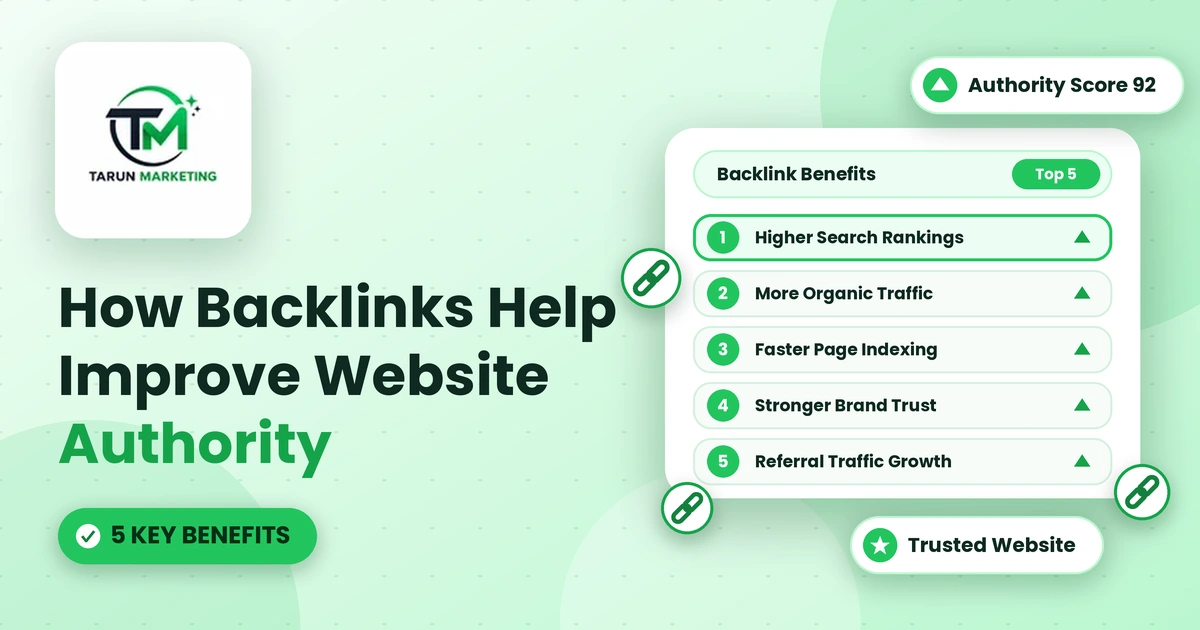
How Backlinks Help Improve Website Authority: 5 Key Benefits
Building a successful website requires more than publishing quality content and choosing attractive designs. If you want your website to appear higher in Google search results, you also need to build trust and credibility. One important part of SEO that helps achieve this is backlinks.
Backlinks are links from other websites that point to your website. They help search engines discover your pages and understand how other websites refer to your content. When relevant and trustworthy websites link to your pages, it can support your website’s credibility and search engine visibility.
In this article, we will explain how backlinks help improve website authority, why they matter for SEO, and how businesses can build quality links naturally.
What Are Backlinks in SEO?
A backlink is simply a hyperlink on another website that directs visitors to your website. For example, if a digital marketing blog mentions your website and adds a link to one of your articles, that link is considered a backlink.
Backlinks are also known as inbound links or incoming links.
Search engines use links to discover new pages and understand relationships between websites. However, not every backlink provides the same value. A link from a relevant and trusted website can be more useful than multiple links from unrelated or low-quality websites.
For businesses that want to improve their online presence, understanding backlinks is an important step in developing an effective SEO strategy.
How Backlinks Help Improve Website Authority
Website authority is commonly used in SEO to describe how trustworthy or influential a website may appear based on different signals. Third-party SEO tools calculate their own authority scores, but Google does not use one universal website authority score as a direct ranking factor.
Here are some important ways backlinks can support your website’s SEO performance.
1. Improve Search Engine Visibility
Backlinks help search engines discover website pages. When another website links to your content, search engine crawlers may follow that link and find your page.
This can be particularly helpful for newly published articles or websites that are still building their online presence.
Getting relevant links from established websites can support content discovery and improve your website’s visibility over time.
2. Build Website Credibility
Imagine that a well-known industry website recommends your business by linking to your content. Visitors may consider your website more trustworthy because another relevant source has referred to it.
This is one reason quality backlinks are valuable.
When your website receives links from reputable sources within your industry, it can strengthen your online reputation and help establish your brand as a useful source of information.
3. Help Improve Google Rankings
Links are among the signals Google uses to understand the importance and relevance of web pages.
However, backlinks alone cannot guarantee higher rankings. Google also considers content quality, search intent, website experience, relevance, and many other factors.
A balanced SEO strategy that combines helpful content, technical improvements, and relevant backlinks can create stronger opportunities for organic growth.
4. Bring Referral Traffic
Backlinks are not only useful for search engines. They can also bring real visitors to your website.
For example, if a popular business blog links to your website, readers interested in your services may click that link and visit your pages.
This is called referral traffic.
Relevant referral visitors may explore your services, read your articles, contact your business, or become potential customers.
5. Strengthen Your Online Brand Presence
When your business is mentioned and linked to by other websites, more people get an opportunity to discover your brand.
Consistent mentions on relevant industry websites, business directories, and professional publications can help improve brand awareness.
Over time, this can support your business reputation and create more opportunities to connect with potential customers.
Also Read – Meta Pixel vs Conversions API: Which one do you Need?
Types of Backlinks You Should Know
Understanding different types of backlinks can help you develop a better link-building strategy.
1. Editorial Backlinks
These links are naturally included in articles because another website finds your content useful. They are valuable because they are based on genuine editorial decisions.
2. Guest Post Backlinks
Guest posting involves writing useful articles for other relevant websites. Depending on the website’s linking policies, you may receive a link to your website within the author information or article.
3. Business Directory Backlinks
Business directories allow companies to list their business information, including their website address. Relevant and trustworthy directories can help people discover local businesses.
4. Resource Page Backlinks
Some websites publish resource pages containing useful tools, guides, and references. If your content provides genuine value, website owners may consider adding it to their resource lists.
5. Nofollow and Sponsored Links
Some links include attributes such as rel=”nofollow” or rel=”sponsored”. These attributes help search engines understand the relationship behind a link. Sponsored links should be properly identified.
How to Build Quality Backlinks for Your Website
Building backlinks requires patience, consistency, and a focus on quality. Instead of trying to get hundreds of links quickly, concentrate on earning relevant links from genuine websites.
Here are some practical strategies.
1. Publish High-Quality Content
Create informative blog posts, detailed guides, helpful tutorials, and original research. When your content solves a problem, other website owners may naturally refer to it.
2. Try Guest Blogging
Find websites that publish content related to your industry. Offer useful and original articles that provide value to their readers.
Avoid publishing the same article across multiple websites just to create backlinks.
3. Submit Your Business to Relevant Directories
If you run a local business, consider listing it in reputable business directories. Make sure your business name, address, contact details, and website URL are accurate.
4. Build Relationships with Other Website Owners
Connect with bloggers, publishers, and businesses in your industry. Share useful information and explore genuine collaboration opportunities.
Strong professional relationships can lead to natural mentions and relevant links.
5. Create Shareable Resources
Infographics, original statistics, industry reports, and practical guides can attract attention from other websites.
Focus on creating resources that people genuinely want to reference and share.
Common Backlink Mistakes to Avoid
While backlinks can support SEO, incorrect link-building practices can create problems.
Avoid these common mistakes:
- Buying large numbers of backlinks from unknown websites.
- Creating links through spammy comments.
- Using irrelevant websites only to get links.
- Participating in link exchange schemes.
- Publishing low-quality guest posts.
- Using automated tools to generate backlinks.
Google’s spam policies explain that manipulative link-building practices can violate its guidelines.
Always focus on earning useful links rather than trying to manipulate search engine rankings.
How to Check Your Website Backlinks
Monitoring your backlinks helps you understand which websites are linking to your content.
You can use several tools for this purpose:
Google Search Console: Provides information about links that Google has identified for your website.
Ahrefs: Offers backlink analysis, referring domains, and competitor research features.
Semrush: Helps analyse backlink profiles and discover link-building opportunities.
Regular monitoring can help you identify useful links, understand your website’s link profile, and plan future SEO activities.
Conclusion
Backlinks are an important part of a well-planned SEO strategy. They can help search engines discover your content, bring referral visitors, improve brand visibility, and support your website’s credibility.
However, successful link building is not about collecting as many links as possible. It is about earning relevant, trustworthy, and valuable links from websites that genuinely relate to your industry.
If you want to strengthen your online presence, combine quality content, proper on-page SEO, technical improvements, and ethical link-building practices.
At Tarun Marketing, we understand the importance of building a strong digital presence through effective SEO strategies. A consistent approach can help businesses improve their visibility and connect with the right audience online.
