

Introduction
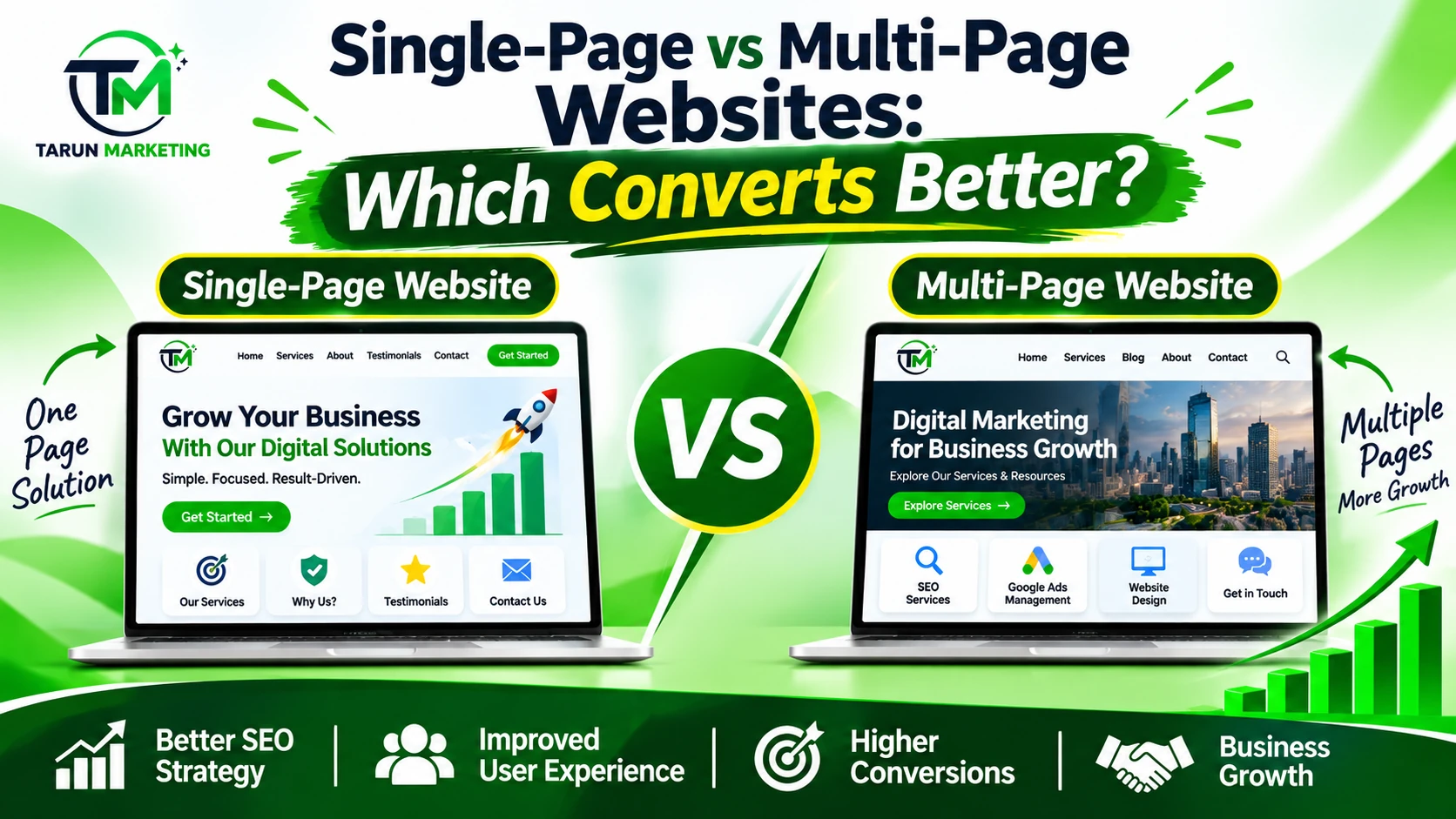
Choosing the right website structure is important for businesses that want to generate leads and increase sales. When comparing Single-Page vs Multi-Page Websites, business owners often wonder which option delivers better conversions. Both website structures have unique advantages, but the right choice depends on business goals, audience needs, and marketing strategies.
Understanding Single-Page vs Multi-Page Websites can help you create a better user experience, improve SEO, and encourage visitors to take action. In this guide, we will compare both website types, explain their benefits, and help you choose the right structure for your business.
What Is a Single-Page Website?
A single-page website presents most of its information on one page. Visitors can scroll through different sections to explore services, testimonials, company information, and contact details.
When discussing Single-Page vs Multi-Page Websites, single-page websites are often preferred by businesses that promote one service or a specific offer.
Benefits of a Single-Page Website
- Simple navigation: Visitors can find important information by scrolling through the page.
- Focused conversion journey: A single-page design can guide visitors toward one primary action.
- Suitable for advertising: Businesses can use a single-page landing page for Google Ads and social media campaigns.
- Easy maintenance: Fewer pages can make website management simpler.
However, a single-page website may become crowded when too much information is added. Businesses targeting multiple services and keywords may need separate pages to provide more detailed content.
What Is a Multi-Page Website?
A multi-page website contains several individual pages, including a homepage, service pages, blog posts, and contact pages. Each page can focus on a particular topic or customer need.
In the discussion of Single-Page vs Multi-Page Websites, multi-page websites are often suitable for growing businesses that offer multiple services.
Benefits of a Multi-Page Website
- More SEO opportunities: Individual pages can target different keywords and search intentions.
- Detailed information: Businesses can explain their services, pricing, and benefits in greater depth.
- Improved navigation: Visitors can find specific information through menus and internal links.
- Business expansion: New service pages and blog posts can be added as the company grows.
For more guidance, read Google’s SEO Starter Guide.
Single-Page vs Multi-Page Websites: Which Converts Better?
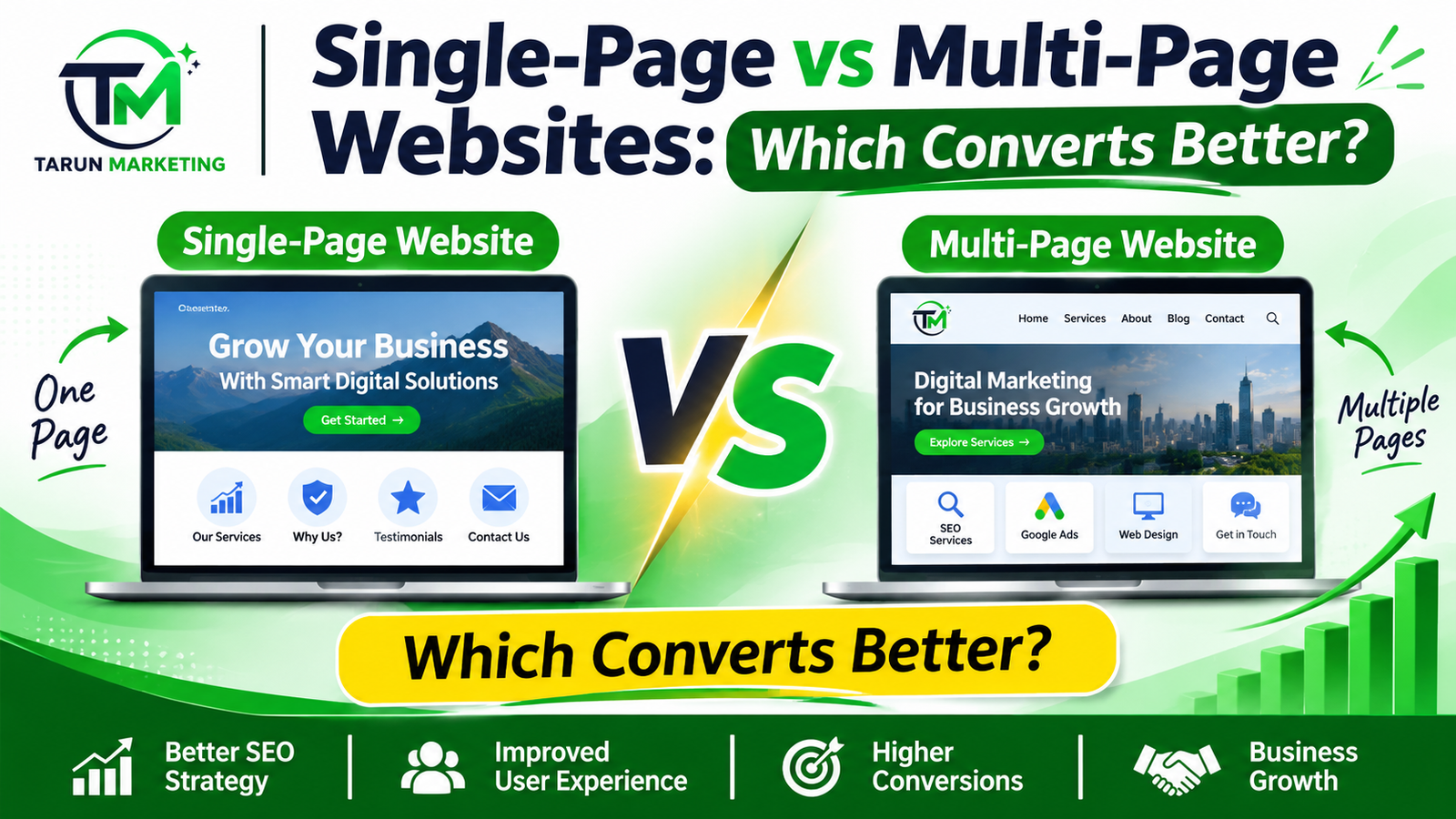
The main question about Single-Page vs Multi-Page Websites is which structure generates more conversions. There is no universal winner because conversion performance depends on the offer, website design, traffic quality, and customer journey.
A single-page website may convert better when visitors have one clear goal, such as booking a consultation or purchasing a specific product. A multi-page website may be more effective when customers need detailed information before making a decision.
For example, a business promoting one special offer through Instagram Ads may benefit from a focused landing page. However, a digital marketing agency offering SEO, Google Ads, and website design may benefit from separate service pages.
Therefore, when evaluating Single-Page vs Multi-Page Websites, businesses should consider what information their customers need before taking action.
Key Differences Between Single-Page vs Multi-Page Websites
The comparison of Single-Page vs Multi-Page Websites includes several important factors.
| Feature | Single-Page Website | Multi-Page Website |
|---|---|---|
| Structure | One main page | Multiple pages |
| Navigation | Scrolling and anchor links | Menus and page links |
| SEO | Best for focused topics | Supports multiple topics |
| Conversion journey | One focused path | Multiple customer journeys |
| Maintenance | Usually simpler | Requires more management |
| Expansion | Can become crowded | Easier to expand |
Understanding these differences helps businesses select a structure that supports their marketing objectives.
How Single-Page vs Multi-Page Websites Affect SEO
SEO is another important factor when comparing Single-Page vs Multi-Page Websites. A single-page website can target a focused keyword, while a multi-page website can target different services and informational topics through separate URLs.
For example, a digital marketing agency could create dedicated pages for SEO services, Google Ads management, and social media marketing. Each page can answer specific customer questions and encourage relevant enquiries.
Internal linking also helps visitors discover related content. You can link your blog posts to your SEO services page or website design services page. Replace these example URLs with your actual website links if needed.
Google provides additional guidance in its link best practices documentation.
Website Speed and User Experience
Website speed and usability influence how visitors experience a website. When comparing Single-Page vs Multi-Page Websites, remember that neither structure is automatically faster.
A single-page website may load slowly if it contains large images, videos, and unnecessary scripts. Similarly, a multi-page website may have performance problems if its pages are not optimized.
Businesses should compress images, create mobile-friendly layouts, and ensure that buttons and forms work correctly. Google’s Page Experience documentation explains several aspects of website usability.
How to Improve Single-Page Website Conversions
If you choose a single-page website, focus on making the visitor journey simple.
First, create a clear headline that explains your service and its benefits. Next, add relevant testimonials, explain your offer, and use a prominent call-to-action button such as “Get a Free Quote.”
Keep the page organized with clear headings and short paragraphs. Avoid unnecessary sections that distract visitors from your primary goal.
These techniques can help businesses improve the performance of single-page websites without adding unnecessary complexity.
How to Improve Multi-Page Website Conversions
For businesses choosing between Single-Page vs Multi-Page Websites, a multi-page website offers more opportunities to create targeted experiences.
Create dedicated landing pages for important services and match each page to the visitor’s search intent. Add relevant calls to action, link related blog posts to service pages, and make your contact information easy to find.
You should also track which pages generate qualified enquiries. Tools such as Google Analytics can help measure website interactions, while Google Search Console provides information about search performance.
Also Read – Technical SEO Explained: Sitemaps, Crawling and Indexing
Which Website Structure Is Best for Your Business?
Choosing between Single-Page vs Multi-Page Websites depends on your business model.
A single-page website is suitable for freelancers, portfolios, event registrations, and businesses promoting one main offer. A multi-page website is often better for companies offering multiple services, online stores, and businesses publishing regular blog content.
A hybrid approach can also work well. You can use a strong homepage, individual service pages, helpful blog articles, and focused landing pages for advertising campaigns.
This structure gives businesses room to expand while keeping the customer journey organized.
Conclusion
The debate around Single-Page vs Multi-Page Websites does not have one answer for every business. A single-page website can be effective for focused campaigns and simple offers, while a multi-page website can support detailed services, broader SEO strategies, and long-term growth.
When choosing between Single-Page vs Multi-Page Websites, consider your audience, business objectives, and the information customers need before converting. Focus on useful content, fast loading speeds, mobile usability, internal linking, and clear calls to action.
Ultimately, the best website structure is the one that helps your visitors find relevant information and confidently take the next step.
