

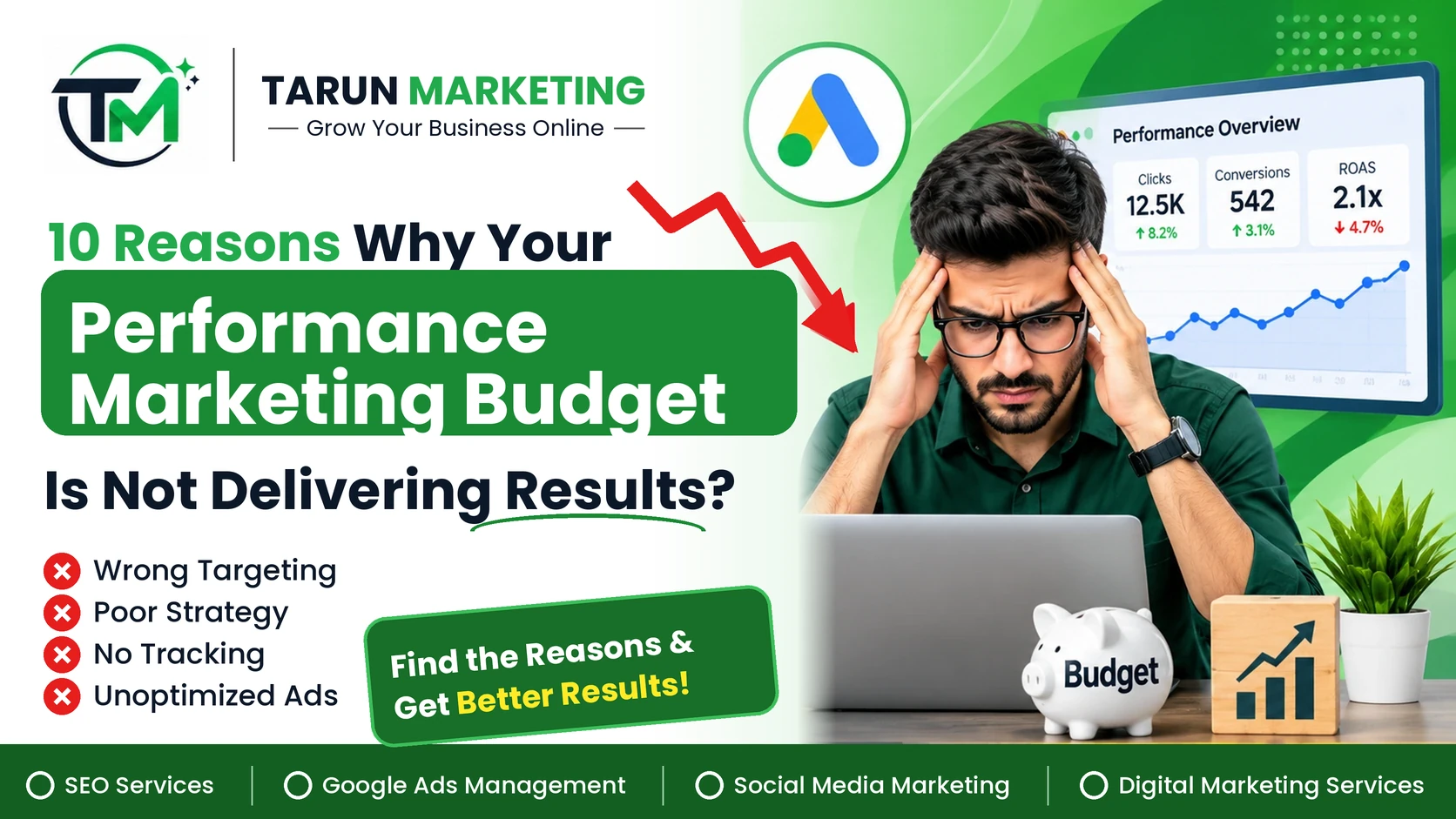
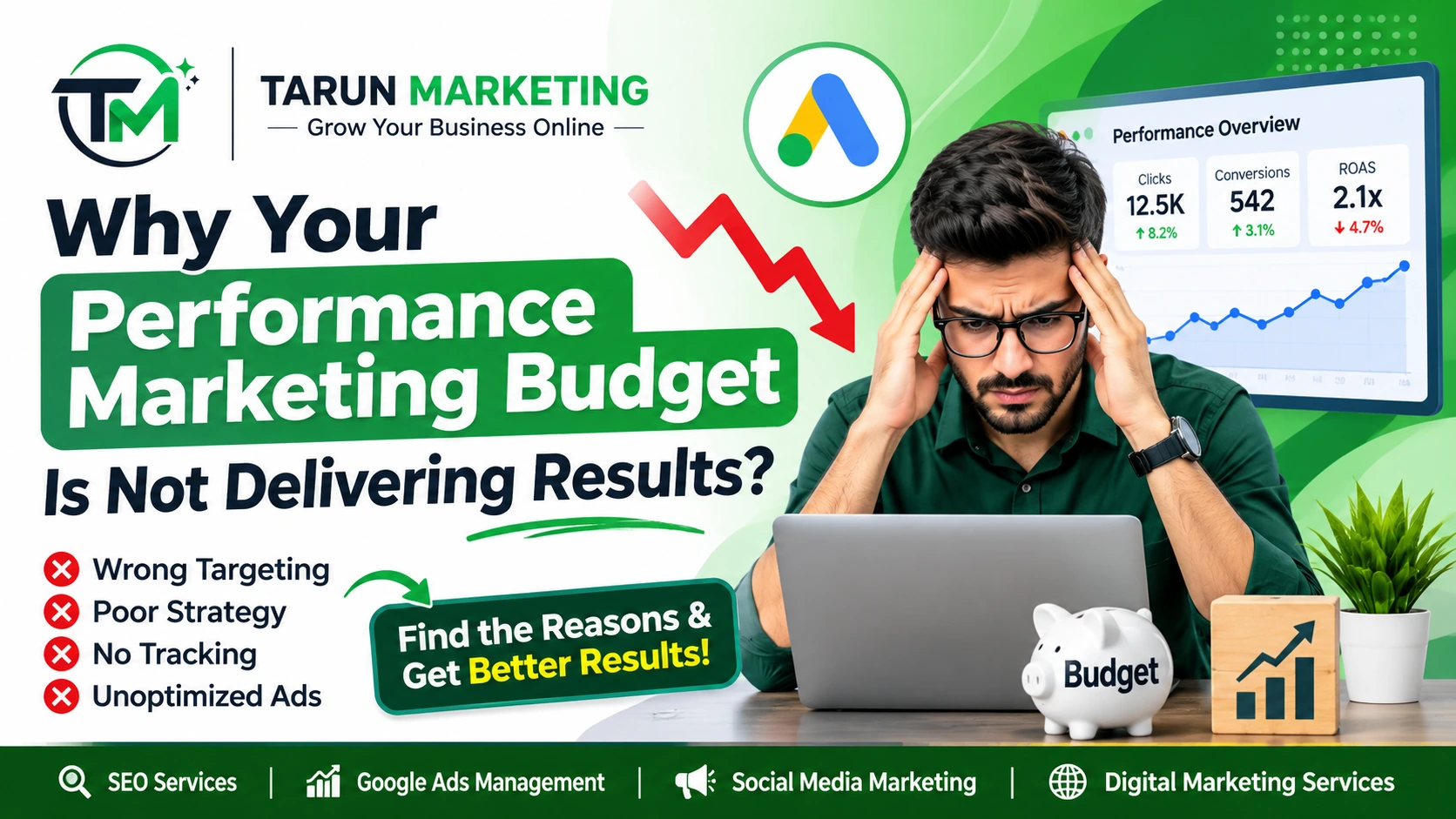
In today’s competitive digital world, businesses invest in online advertising to attract customers, generate leads, and increase sales. However, spending money on Google Ads, Facebook Ads, Instagram Ads, and other advertising platforms does not always guarantee success. Many businesses struggle to achieve their desired results even after investing a significant amount of money in digital campaigns.
One of the biggest reasons behind this problem is poor Performance Marketing Budget planning. Without a clear strategy, businesses may spend money on the wrong audience, ineffective advertisements, or campaigns that do not match their marketing objectives.
A well-planned marketing budget helps businesses control advertising expenses, improve campaign performance, and achieve better returns on investment. In this article, we will explore the common reasons why your marketing budget is not delivering results and how you can improve your advertising strategy.
1. Lack of Clear Marketing Goals
One common reason why a Performance Marketing Budget fails is the absence of clear marketing goals. Businesses often start advertising campaigns without deciding what they actually want to achieve.
Some businesses want website traffic, while others focus on generating leads, increasing sales, or improving brand awareness. Each objective requires a different advertising strategy.
For example, a campaign designed to increase website visits may generate traffic but not necessarily produce sales. Similarly, a lead generation campaign may bring inquiries without guaranteeing conversions.
How to Fix It:
- Define your advertising objectives before launching campaigns.
- Decide whether you want traffic, leads, sales, or brand awareness.
- Set measurable performance targets.
- Match your campaign type with your business goals.
Clear objectives help you use your Performance Marketing Budget more effectively.
2. Targeting the Wrong Audience
Even an attractive advertisement may fail if it reaches the wrong audience. Many businesses waste their advertising money by targeting people who are not interested in their products or services.
For example, a local service provider may run advertisements across an entire country when its actual customers are located in a specific city.
Incorrect age groups, locations, interests, and customer preferences can increase advertising costs without generating valuable results.
How to Fix It:
- Identify your ideal customer.
- Use location-based targeting for local businesses.
- Study customer interests and purchasing behaviour.
- Create separate audience groups for different campaigns.
- Test different audiences to identify which performs better.
Understanding your audience is essential for improving the effectiveness of your Performance Marketing Budget.
3. Poor Quality Ad Creatives and Content
Your advertisement is often the first interaction potential customers have with your business. If your ad creative is unattractive, confusing, or lacks a clear message, people may simply scroll past it.
Poor images, weak headlines, irrelevant videos, and unclear offers can reduce engagement and increase advertising costs.
For example, an advertisement promoting digital marketing services should clearly communicate the services offered and explain how customers can benefit from them.
How to Fix It:
- Use professional and relevant images.
- Write attention-grabbing headlines.
- Highlight your unique selling points.
- Include a clear call to action.
- Test multiple ad designs and messages.
High-quality creatives can help businesses improve engagement and make better use of their Performance Marketing Budget.
4. Sending Visitors to a Poor Landing Page
Getting clicks on advertisements is only one part of digital marketing. The next step is converting those visitors into customers.
If your website loads slowly, looks outdated, or has complicated navigation, visitors may leave without taking any action.
A landing page should provide relevant information about the advertised product or service. It should also make it easy for visitors to contact your business, submit an inquiry, or complete a purchase.
How to Fix It:
- Create landing pages relevant to each campaign.
- Improve website loading speed.
- Make your website mobile-friendly.
- Add visible contact information.
- Use simple forms and clear call-to-action buttons.
- Display customer reviews and trust signals where appropriate.
A well-designed landing page helps convert advertising traffic into meaningful business opportunities.
5. Not Tracking the Right Performance Metrics
Another major reason businesses struggle with their Performance Marketing Budget is poor performance tracking.
Many advertisers focus only on impressions, clicks, and reach. Although these metrics are important, they do not always show whether a campaign is generating business results.
Businesses should also monitor conversion rates, cost per lead, customer acquisition cost, and return on ad spend.
Important Metrics to Track:
- CTR (Click-Through Rate): Measures how many people click after seeing an advertisement.
- CPC (Cost Per Click): Shows how much you pay for each click.
- CPL (Cost Per Lead): Measures the cost of generating a lead.
- CPA (Cost Per Acquisition): Shows the cost of acquiring a customer or completing a defined action.
- ROAS (Return on Ad Spend): Measures the revenue generated compared with advertising expenditure.
Tracking these metrics helps businesses understand where their advertising money is going and which campaigns need improvement.
6. Spending Too Much on the Wrong Advertising Channels
Not every advertising platform works equally well for every business. Some companies get better results from Google Ads, while others perform better through Facebook and Instagram advertising.
For example, businesses offering emergency repair services may benefit from Google Search Ads because customers actively search for those services. On the other hand, fashion brands may use Instagram and Facebook to showcase products and reach potential buyers.
Spending money on multiple platforms without understanding their performance can waste your Performance Marketing Budget.
How to Fix It:
- Identify where your potential customers spend time.
- Compare the performance of different advertising platforms.
- Start with a manageable budget.
- Focus on channels that generate quality leads or sales.
- Reduce spending on campaigns that consistently underperform.
The goal should be to invest in the right platform rather than advertising everywhere.
Also Read – Performance Marketing vs Traditional Marketing: Why ROI Matters More Than Reach
7. Not Testing and Optimizing Campaigns
Launching an advertisement and leaving it unchanged for weeks is not a good marketing strategy. Customer behaviour, competition, and advertising performance can change over time.
Businesses should regularly test different headlines, images, videos, audience groups, and offers.
For example, one advertisement may generate more clicks, while another may bring better-quality leads. Without testing, it becomes difficult to identify which version provides better business value.
How to Fix It:
- Run A/B tests on different ad creatives.
- Experiment with headlines and descriptions.
- Compare audience performance.
- Review campaign results regularly.
- Make changes based on actual data.
Continuous optimization helps businesses improve campaign efficiency and get better results from their Performance Marketing Budget.
8. Ignoring Follow-Ups and Lead Management
Generating leads does not automatically mean generating customers. Sometimes advertising campaigns perform well, but businesses fail to convert inquiries into sales because they do not follow up properly.
For example, a potential customer may submit a contact form but never receive a call or message. Delayed responses can cause businesses to lose valuable opportunities.
How to Fix It:
- Respond to customer inquiries quickly.
- Maintain a proper lead database.
- Use email or WhatsApp follow-ups where appropriate and with customer consent.
- Train your sales team to handle inquiries.
- Track how many leads become paying customers.
Good lead management ensures that advertising investments have a better chance of producing actual revenue.
9. Setting an Unrealistic Advertising Budget
Some businesses expect immediate results from a very small advertising investment. Others spend too much without understanding their customer acquisition costs.
Both situations can create problems. A realistic Performance Marketing Budget should consider business objectives, competition, product pricing, profit margins, and customer demand.
How to Fix It:
- Research advertising costs in your industry.
- Start with a budget you can afford to test.
- Calculate your expected cost per lead or sale.
- Increase spending when campaigns show sustainable results.
- Avoid increasing budgets without reviewing performance.
Smart budget planning helps businesses control expenses while creating opportunities for growth.
10. Not Using Conversion Tracking Properly
Conversion tracking helps businesses understand which advertisements are generating meaningful actions. Without accurate tracking, advertisers may struggle to identify successful campaigns.
For example, a business might receive website visits but have no information about how many visitors submitted contact forms or purchased products.
Tools such as Google Ads Conversion Tracking and Google Analytics 4 help businesses measure important customer actions.
How to Fix It:
- Set up conversion tracking for important actions.
- Track form submissions and phone inquiries.
- Monitor purchases and other valuable events.
- Check whether tracking is recording data correctly.
- Use conversion information to improve advertising decisions.
Accurate tracking makes it easier to understand whether your Performance Marketing Budget is producing valuable outcomes.
How to Improve Your Performance Marketing Budget in 2026
Improving advertising results requires more than simply increasing spending. Businesses need a structured approach that combines planning, audience research, creative testing, and performance analysis.
Here are some practical strategies:
- Set clear objectives: Decide what you want every campaign to achieve.
- Understand your customers: Research their needs, interests, and buying behaviour.
- Choose suitable platforms: Invest in advertising channels that match your audience.
- Create better advertisements: Use relevant visuals, strong headlines, and clear offers.
- Optimize landing pages: Make it easy for visitors to take action.
- Track important metrics: Focus on leads, sales, conversions, and ROI.
- Review campaign performance: Regularly identify opportunities to improve results.
Businesses that follow these practices can make more informed decisions and use their advertising resources efficiently.
Conclusion
A poorly managed Performance Marketing Budget can prevent businesses from achieving their digital marketing goals. Wrong audience targeting, weak advertisements, poor landing pages, incorrect tracking, and a lack of campaign optimization are some of the most common reasons behind disappointing advertising results.
Instead of increasing advertising expenses without a strategy, businesses should focus on understanding their audience, setting realistic goals, tracking conversions, and improving campaign performance.
With proper planning and continuous optimization, businesses can reduce unnecessary advertising expenses, generate better-quality leads, and improve their return on investment.
If your business is struggling to get results from online advertising, working with an experienced digital marketing team can help you identify problems and build a more effective marketing strategy.
Tarun Marketing helps businesses strengthen their online presence through SEO, web design and development, social media marketing, search engine marketing, and graphic design. A well-planned digital marketing approach can help your business reach the right audience and work towards sustainable growth.
