

Search Ads vs Display Ads: Which One Should You Choose?
If you’re planning to advertise your business online, you’ve probably come across the debate about Search Ads vs Display Ads. Both are powerful Google Ads campaign types, but they serve different purposes and deliver different results. Choosing the right one can significantly impact your website traffic, leads, and sales.
Many business owners struggle to decide which advertising method is best. Should you target people actively searching for your products, or should you build brand awareness by displaying attractive banner ads across websites? The answer depends on your business goals, budget, and target audience.
In this guide, you’ll learn everything about Search Ads vs Display Ads, including how they work, their benefits, differences, and which option is best for your business. By the end of this article, you’ll be able to make a confident decision and create a more effective digital marketing strategy.
Understanding Search Ads vs Display Ads is the first step toward creating a successful Google Ads strategy.
What Are Search Ads?
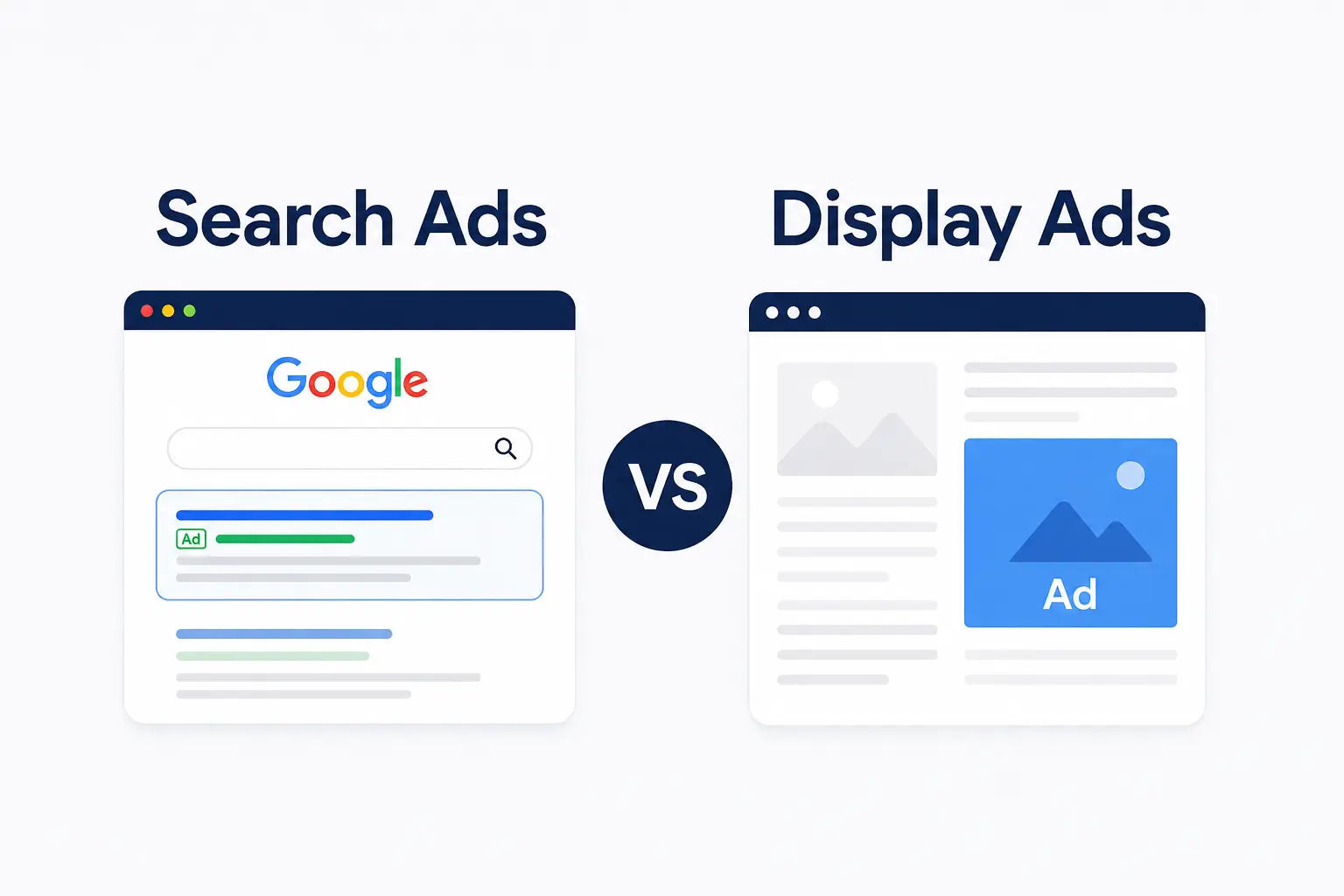
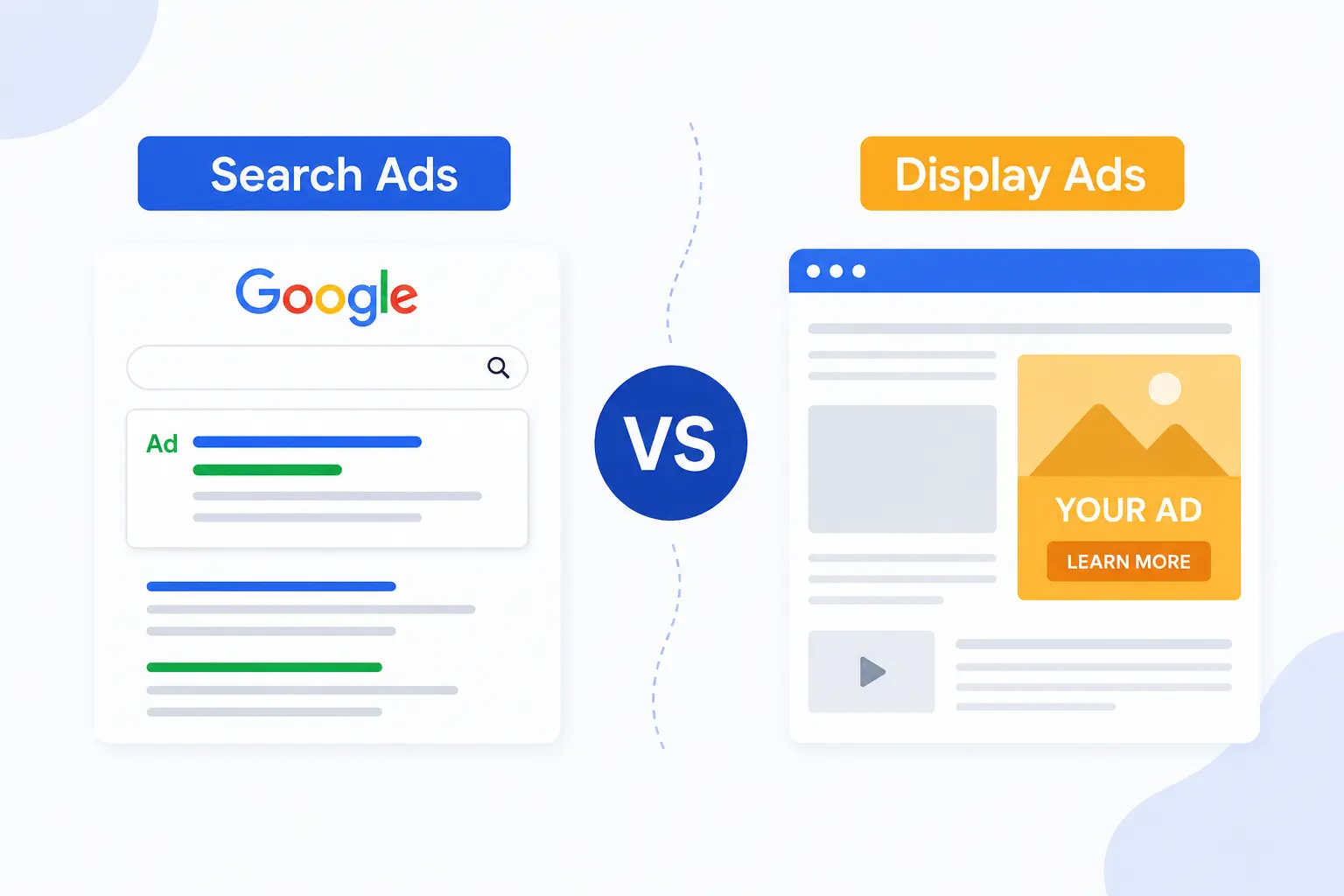
Search Ads are text-based advertisements that appear on search engine results pages when users search for specific keywords. These ads are commonly displayed at the top or bottom of Google search results and are marked as “Sponsored.”
For example, if someone searches for “best digital marketing agency”, Google may display paid Search Ads before the organic search results. Since users are actively searching for a solution, Search Ads often attract highly interested visitors.
When comparing Search Ads vs Display Ads, Search Ads are ideal for reaching users with strong purchase intent.
How Search Ads Work
Search Ads operate on a Pay-Per-Click (PPC) model. This means you only pay when someone clicks on your advertisement.
The process is simple:
- You choose keywords related to your business.
- You create compelling ad copy.
- You set your advertising budget.
- Google shows your ad when someone searches for those keywords.
- You pay only when a user clicks on your ad.
Because these users already have buying intent, Search Ads usually produce higher conversion rates than many other advertising methods.
Benefits of Search Ads
Here are some major advantages of using Search Ads:
1. Reach High-Intent Customers
People searching on Google are already looking for products or services. This means they’re more likely to become customers.
2. Quick Results
Unlike SEO, which may take months, Search Ads can start driving traffic immediately after your campaign goes live.
3. Better Lead Generation
Since users already have purchase intent, Search Ads often generate high-quality leads.
4. Budget Control
You can set daily or monthly budgets and adjust them whenever needed.
5. Measurable Performance
Google Ads provides detailed reports showing impressions, clicks, conversions, and cost per click, making it easy to optimize campaigns.
What Are Display Ads?
Display Ads are visual advertisements that appear on websites, blogs, mobile apps, and YouTube through the Google Display Network (GDN). Unlike Search Ads, they rely on images, graphics, animations, and sometimes videos to capture users’ attention.
Instead of targeting people who are actively searching, Display Ads reach users while they browse different websites or use apps.
For example, someone reading a technology blog may see a banner promoting your web design services. Even if they weren’t searching for your business, the ad introduces your brand and builds awareness.
One of the biggest differences in Search Ads vs Display Ads is how each campaign reaches potential customers.
How Display Ads Work
Display Ads use audience targeting rather than search intent.
Google can show your ads based on:
- User interests
- Online behavior
- Website visits
- Demographics
- Topics
- Specific websites
- Remarketing audiences
This makes Display Ads an excellent choice for increasing brand visibility and reconnecting with previous website visitors.
Benefits of Display Ads
1. Excellent Brand Awareness
Display Ads help introduce your business to thousands of potential customers across millions of websites.
2. Attractive Visual Content
Images and graphics grab attention faster than plain text, making Display Ads ideal for promoting products, services, or special offers.
3. Powerful Remarketing
Display Ads allow you to reconnect with people who have already visited your website but didn’t complete a purchase.
4. Large Audience Reach
The Google Display Network reaches over 90% of internet users worldwide, giving businesses incredible exposure.
5. Cost-Effective Advertising
Display campaigns often have lower cost-per-click than Search Ads, making them suitable for businesses with limited advertising budgets.
Search Ads vs Display Ads: Why Understanding the Difference Matters
Choosing between Search Ads vs Display Ads isn’t about finding one option that’s better than the other. Instead, it’s about selecting the campaign type that matches your marketing objectives.
If your goal is immediate sales and qualified leads, Search Ads may be the right choice.
If you want to increase brand awareness, promote new products, or retarget previous visitors, Display Ads may deliver better results.
Many successful businesses actually combine both campaign types to attract new customers while also staying visible throughout the customer journey.
Now that you understand how each campaign type works, it’s time to compare Search Ads vs Display Ads side by side. Although both are part of Google Ads, they serve different purposes and are designed for different stages of the customer journey.
Search Ads vs Display Ads: Key Differences
This Search Ads vs Display Ads comparison will help you decide which advertising method fits your business goals.
| Feature | Search Ads | Display Ads |
|---|---|---|
| Ad Format | Text Ads | Image, Banner, GIF, or Responsive Ads |
| Where They Appear | Google Search Results | Websites, Apps, YouTube, Gmail |
| User Intent | High (actively searching) | Medium to Low (browsing content) |
| Main Goal | Generate Leads and Sales | Brand Awareness and Remarketing |
| Click-Through Rate | Generally Higher | Generally Lower |
| Conversion Rate | Higher | Lower for cold audiences |
| Best For | Service Businesses, Local Businesses, Ecommerce | Brand Promotion, Product Awareness, Retargeting |
From this comparison, it’s clear that Search Ads vs Display Ads isn’t about which one is universally better. Instead, each campaign is designed to achieve different marketing goals.
Advantages of Search Ads
Many businesses choose Search Ads vs Display Ads based on their marketing objectives and budget.
1. High Purchase Intent
People searching on Google usually need an immediate solution. This makes Search Ads excellent for generating qualified leads.
2. Better Conversion Rates
Since users are already interested, Search Ads often convert better than Display Ads.
3. Immediate Visibility
Your business can appear at the top of Google search results within hours of launching a campaign.
4. Easy Performance Tracking
Google Ads provides detailed metrics such as impressions, clicks, conversions, cost per click (CPC), and return on investment (ROI).
5. Ideal for Local Businesses
Businesses offering local services such as web design, SEO, graphic design, or digital marketing can reach customers searching nearby.
Disadvantages of Search Ads
Although Search Ads are highly effective, they also have some limitations.
High Competition
Popular keywords often have many advertisers, increasing advertising costs.
Expensive Keywords
Industries like finance, legal services, insurance, and digital marketing can have high cost-per-click rates.
Limited Creativity
Search Ads mainly use headlines and descriptions, so there is less opportunity to attract users visually.
Advantages of Display Ads
The debate around Search Ads vs Display Ads often depends on whether your goal is awareness or conversions.
Massive Reach
Google Display Network reaches millions of websites and mobile applications, helping businesses connect with a huge audience.
Strong Brand Recognition
People repeatedly seeing your brand build familiarity and trust over time.
Attractive Visual Design
Images, banners, and graphics help communicate your message much faster than text alone.
Excellent for Remarketing
Display Ads allow businesses to reconnect with visitors who previously left their website without taking action.
Lower Cost Per Click
Many Display campaigns cost less per click compared to Search campaigns, making them suitable for awareness campaigns.
Disadvantages of Display Ads
Like every advertising method, Display Ads also have some drawbacks.
Lower Purchase Intent
Users aren’t actively searching for your products, so conversions are usually lower.
Banner Blindness
Some internet users ignore banner advertisements because they see them frequently.
More Creative Work
Successful Display Ads require professional graphics, compelling headlines, and attractive designs.
When Should You Choose Search Ads?
Choose Search Ads if your goal is:
- Generate leads quickly
- Increase website inquiries
- Get phone calls
- Sell products online
- Promote local services
- Capture customers actively searching for your services
For example, if someone searches for “SEO agency near me,” Search Ads can place your business in front of that customer immediately.
When Should You Choose Display Ads?
Choose Display Ads if you want to:
- Increase brand awareness
- Launch a new product
- Reach new audiences
- Promote seasonal offers
- Re-engage previous website visitors
- Build long-term customer recognition
For example, a business launching a new website design service can use Display Ads to introduce its brand across popular websites.
Search Ads vs Display Ads: Which Delivers Better ROI?
The answer depends on your objective.
If your primary goal is immediate conversions and lead generation, Search Ads vs Display Ads usually favors Search Ads because they target users with high purchase intent.
However, if your goal is long-term brand growth and customer awareness, Display Ads often provide better value by reaching a much larger audience at a lower cost.
Many successful businesses don’t choose one over the other—they use both together. Search Ads capture ready-to-buy customers, while Display Ads keep the brand visible and encourage users to return later.
After understanding the differences between Search Ads vs Display Ads, the next step is deciding which campaign type best suits your business goals. There isn’t a one-size-fits-all answer because every business has different objectives, budgets, and target audiences.
Which One Should You Choose?
Choosing between Search Ads vs Display Ads becomes easier once you understand your audience and campaign goals.
Choose Search Ads If You Want To:
- Generate qualified leads quickly
- Increase website inquiries
- Drive phone calls
- Sell products or services immediately
- Target customers actively searching on Google
Search Ads work best for businesses such as digital marketing agencies, web design companies, plumbers, electricians, consultants, healthcare providers, and eCommerce stores selling products with high purchase intent.
Choose Display Ads If You Want To:
- Increase brand awareness
- Promote a new business or product
- Reach a larger audience
- Build customer trust over time
- Run remarketing campaigns
- Stay visible throughout the customer journey
Display Ads are particularly effective for businesses launching new services, promoting seasonal offers, or strengthening their online presence.
Why Many Businesses Use Both
Instead of choosing only one campaign type, many successful companies combine Search Ads vs Display Ads to maximize results.
For example:
- Search Ads capture customers who are actively searching for a service.
- Display Ads remind previous visitors about your business after they leave your website.
- Together, they create a complete marketing funnel that increases visibility, trust, and conversions.
Using both campaign types allows businesses to attract new customers while staying connected with potential buyers until they are ready to make a purchase.
Best Practices for Search Ads
To get better results from Search Ads, follow these tips:
- Research relevant keywords before launching your campaign.
- Write clear and compelling ad headlines.
- Include a strong call-to-action such as “Get a Free Quote” or “Contact Us Today.”
- Create dedicated landing pages for each advertisement.
- Monitor campaign performance regularly and optimize keywords.
- Use negative keywords to avoid irrelevant clicks.
These practices help improve your Quality Score and increase your return on investment.
Best Practices for Display Ads
Display campaigns perform better when they focus on attractive visuals and audience targeting.
Here are some useful tips:
- Use high-quality images and graphics.
- Keep ad text short and easy to understand.
- Maintain consistent brand colors and messaging.
- Target the right audience based on interests and demographics.
- Run remarketing campaigns to reconnect with previous visitors.
- Test multiple banner sizes and designs to improve performance.
Well-designed Display Ads can significantly improve brand recognition and customer engagement.
Common Mistakes to Avoid
Whether you’re using Search Ads or Display Ads, avoid these common mistakes:
- Choosing broad keywords without research.
- Ignoring mobile users.
- Sending visitors to a poor landing page.
- Not tracking conversions.
- Using low-quality ad creatives.
- Running campaigns without testing different versions.
- Failing to optimize campaigns regularly.
Avoiding these mistakes can save money and improve campaign performance over time.
Frequently Asked Questions (FAQs)
Are Search Ads better than Display Ads?
Not always. Search Ads are better for generating immediate leads, while Display Ads are ideal for increasing brand awareness and remarketing.
Which advertising method is more affordable?
Display Ads often have a lower cost per click. However, Search Ads may provide a higher return on investment because they target users with strong purchase intent.
Can I run both Search Ads and Display Ads together?
Yes. Many businesses use both campaign types to reach customers at different stages of the buying journey. This approach often produces the best overall results.
Which campaign is best for a small business?
Small businesses looking for quick leads usually benefit from Search Ads first. Once brand awareness grows, Display Ads can be added to expand reach and support remarketing efforts.
Conclusion
Understanding Search Ads vs Display Ads is essential for building an effective online advertising strategy. While Search Ads connect your business with people actively searching for your products or services, Display Ads help increase brand awareness and keep your business visible across the web.
The best choice depends on your marketing goals. If you need immediate leads and conversions, Search Ads are usually the better option. If your focus is long-term brand growth and customer engagement, Display Ads are an excellent investment.
For many businesses, the most effective strategy is to combine both campaign types. By using Search Ads to capture high-intent customers and Display Ads to nurture potential buyers, you can create a balanced marketing approach that delivers stronger results over time.
Whether you’re just starting with Google Ads or looking to improve your existing campaigns, understanding Search Ads vs Display Ads will help you make smarter advertising decisions and achieve better business growth.
We hope this Search Ads vs Display Ads guide helps you make informed advertising decisions and improve your marketing results.
Learn More
To understand Google Ads in more detail, you can visit these official resources:
- https://support.google.com/google-ads/
- https://ads.google.com/
- https://developers.google.com/google-ads
Just insert these links naturally in your content.
Google Ads Help Center → https://support.google.com/google-ads/
Need expert help with Google Ads? Check out our Search Engine Marketing Services.
