
Instagram vs Facebook: Which Platform Is Better for Business?
Introduction
Choosing the right social media platform is one of the most important decisions for any business looking to build an online presence. With millions of active users worldwide, Instagram and Facebook have become two of the most powerful marketing platforms. However, many business owners struggle to decide which platform will deliver better results. Understanding Instagram vs Facebook for Business can help you create a marketing strategy that reaches the right audience, increases engagement, and drives more sales.
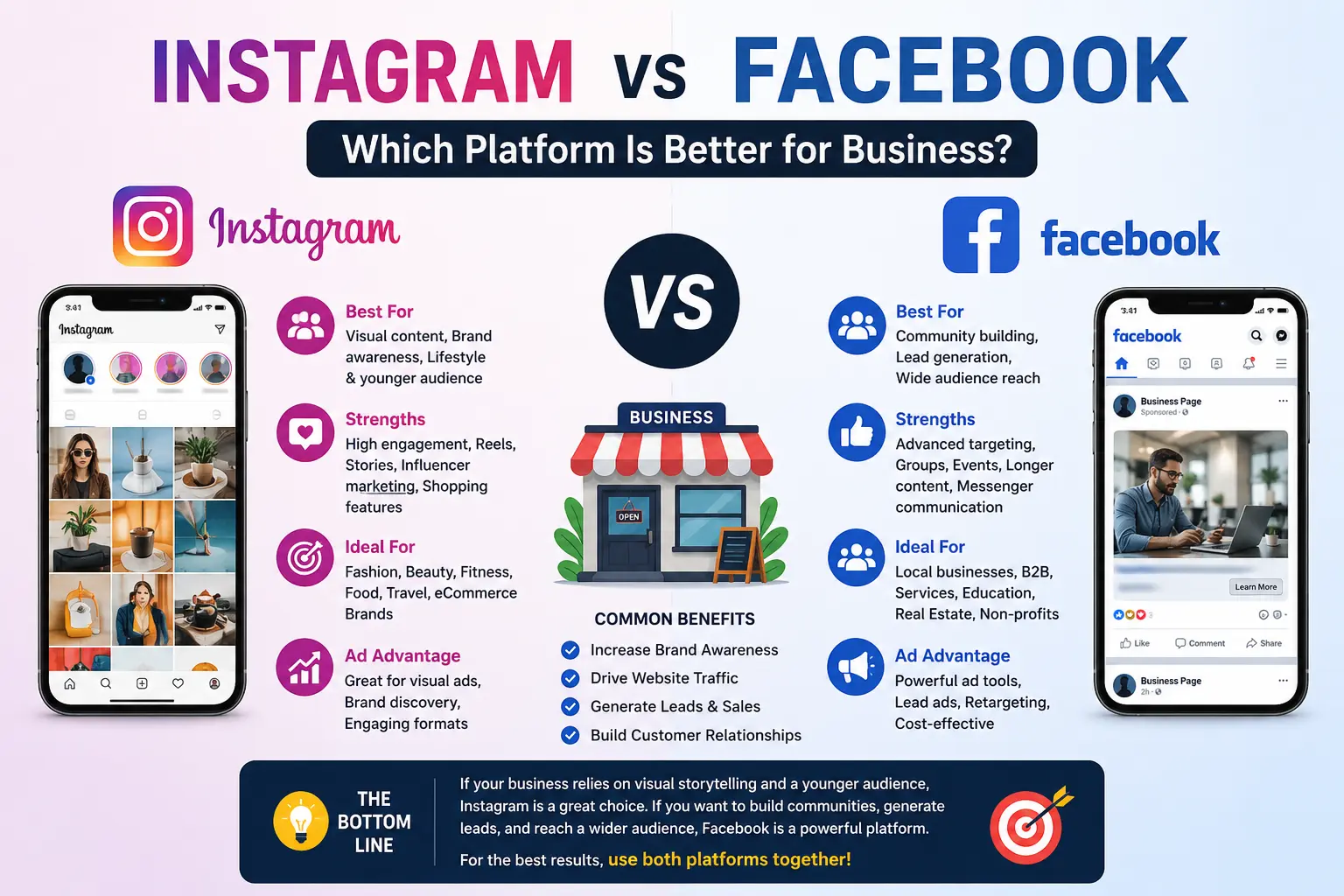
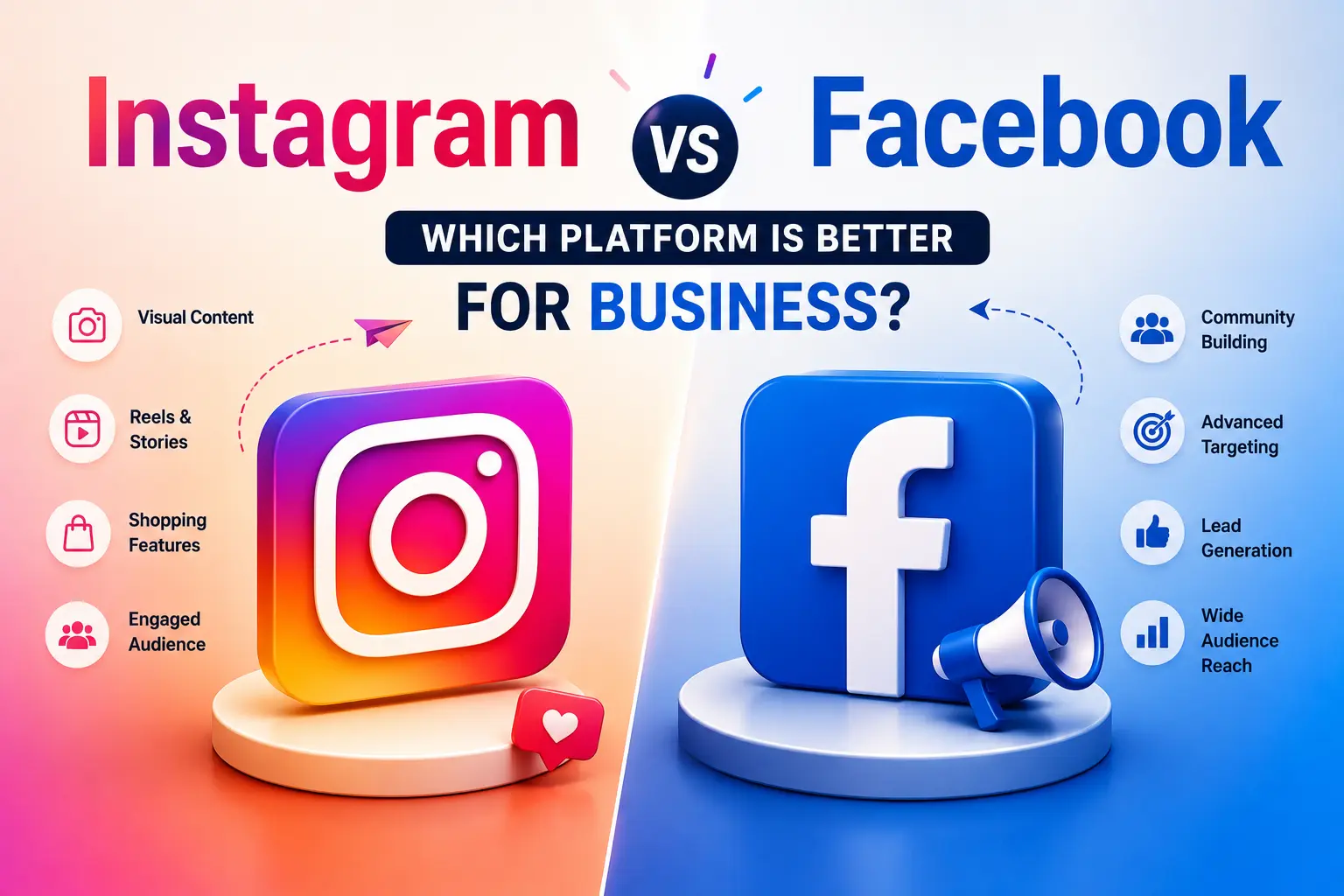
Both platforms offer unique advantages. Instagram is known for its visually appealing content and younger audience, while Facebook provides extensive community-building features and advanced advertising options. Instead of choosing based on popularity, businesses should evaluate their goals, target audience, and content strategy. This guide on Instagram vs Facebook for Business will help you compare both platforms and decide which one is the better fit for your brand.
Why Social Media Matters for Businesses
Social media is no longer just a place to share updates or photos. It has become a powerful marketing channel that helps businesses connect with customers, build trust, and generate leads. Whether you run a small local business or a large company, social media allows you to promote products, communicate with your audience, and increase brand awareness at a relatively low cost.
When comparing Instagram vs Facebook for Business, it is important to understand that both platforms can contribute to business growth in different ways. Choosing the right platform can improve customer engagement, strengthen your brand image, and increase conversions.
Understanding Instagram for Business
Instagram is a visual-first platform designed to showcase high-quality images, videos, Stories, Reels, and interactive content. Businesses that rely on attractive visuals often achieve excellent results on Instagram.
One of the biggest advantages of Instagram vs Facebook for Business is Instagram’s ability to create strong engagement through creative content. Users spend time exploring photos, short-form videos, and influencer recommendations, making it an ideal platform for businesses that want to inspire customers.
Benefits of Instagram for Business
- High engagement rates compared to many other social platforms.
- Excellent platform for showcasing products and services.
- Reels help businesses reach new audiences organically.
- Stories allow brands to interact through polls, quizzes, and questions.
- Influencer collaborations can improve brand visibility.
- Shopping features make purchasing products easier.
Businesses in industries such as fashion, beauty, fitness, food, travel, and lifestyle often experience excellent growth on Instagram because customers enjoy visual content before making purchasing decisions.
Understanding Facebook for Business
Facebook remains one of the largest social media platforms with billions of active users across different age groups. It offers businesses multiple ways to connect with potential customers through business pages, groups, events, videos, and paid advertising.
When discussing Instagram vs Facebook for Business, Facebook stands out because of its powerful advertising tools and community-building capabilities. Businesses can create detailed audience segments, promote events, and share long-form content that keeps customers informed.
Benefits of Facebook for Business
- Access to a wide range of age groups.
- Powerful advertising and audience targeting options.
- Facebook Groups help build loyal communities.
- Longer posts allow businesses to share detailed information.
- Events help promote webinars, launches, and local activities.
- Messenger enables direct customer communication.
For businesses targeting families, professionals, or local communities, Facebook often provides better opportunities to build long-term customer relationships.
Instagram vs Facebook for Business: Audience Comparison
Understanding your audience is one of the most important steps when deciding between Instagram vs Facebook for Business.
Instagram attracts a younger audience, including Millennials and Gen Z users who prefer short videos, creative visuals, and influencer-driven content. These users are highly engaged and often discover new brands through Reels, hashtags, and Explore pages.
Facebook has a broader audience across multiple age groups. It remains popular among adults, professionals, parents, and local communities. Businesses that rely on community engagement, educational content, or local services often find Facebook to be highly effective.
If your target audience consists of younger customers who enjoy visual storytelling, Instagram may be the better choice. If your business serves a wider demographic or focuses on community interaction, Facebook could deliver stronger results.
Content Strategy: Which Platform Performs Better?
Another important factor in Instagram vs Facebook for Business is the type of content you plan to publish.
Instagram performs best with:
- High-quality photos
- Reels
- Stories
- Product showcases
- Behind-the-scenes content
- Influencer collaborations
Facebook performs well with:
- Blog posts
- Business updates
- Customer testimonials
- Videos
- Community discussions
- Live sessions
- Event promotions
Businesses should choose the platform that matches their content creation capabilities. Brands with strong visual content often succeed on Instagram, while businesses producing educational or community-focused content may benefit more from Facebook.
Engagement and Brand Awareness
One of the biggest differences in Instagram vs Facebook for Business is user engagement.
Instagram generally offers higher engagement rates because users actively interact with photos, Reels, and Stories. Features such as comments, saves, shares, and direct messages encourage meaningful conversations between businesses and customers.
Facebook, on the other hand, focuses more on building communities through Groups, discussions, and business pages. Although organic reach has decreased over time, businesses can still achieve excellent results through valuable content and targeted advertising.
Successful businesses often combine both platforms to maximize brand awareness, reach different audiences, and create a balanced digital marketing strategy.