

Introduction
Have you ever wondered why some websites appear on the first page of Google while others struggle to attract visitors? Every website owner wants to improve their online visibility and reach more potential customers. To achieve this goal, it is important to understand how Google ranks website content and what makes a webpage useful for searchers.
Google uses different systems to discover, understand and evaluate webpages. It considers several signals, including content quality, keyword relevance, website speed, backlinks, mobile-friendliness and user experience.
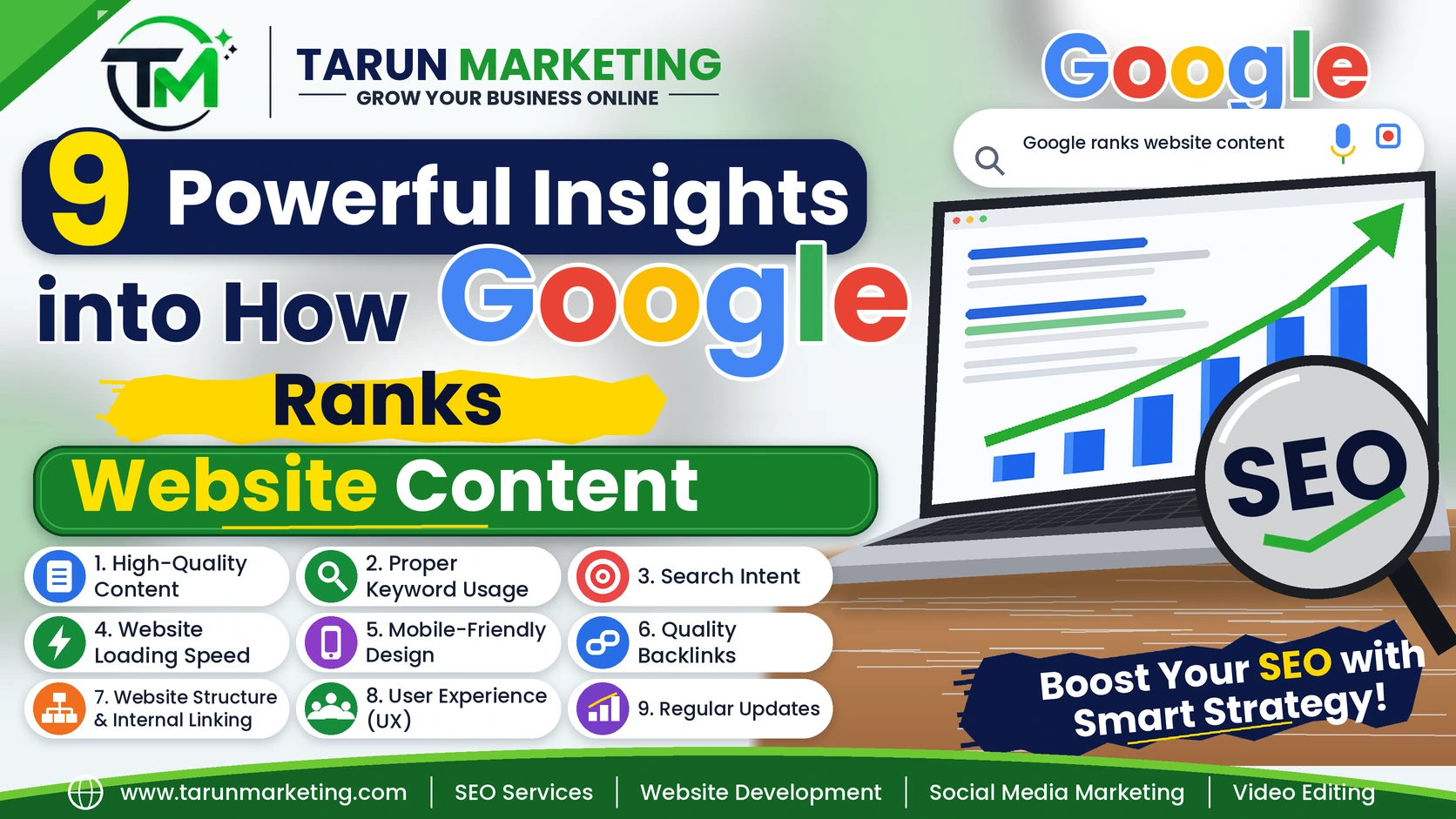
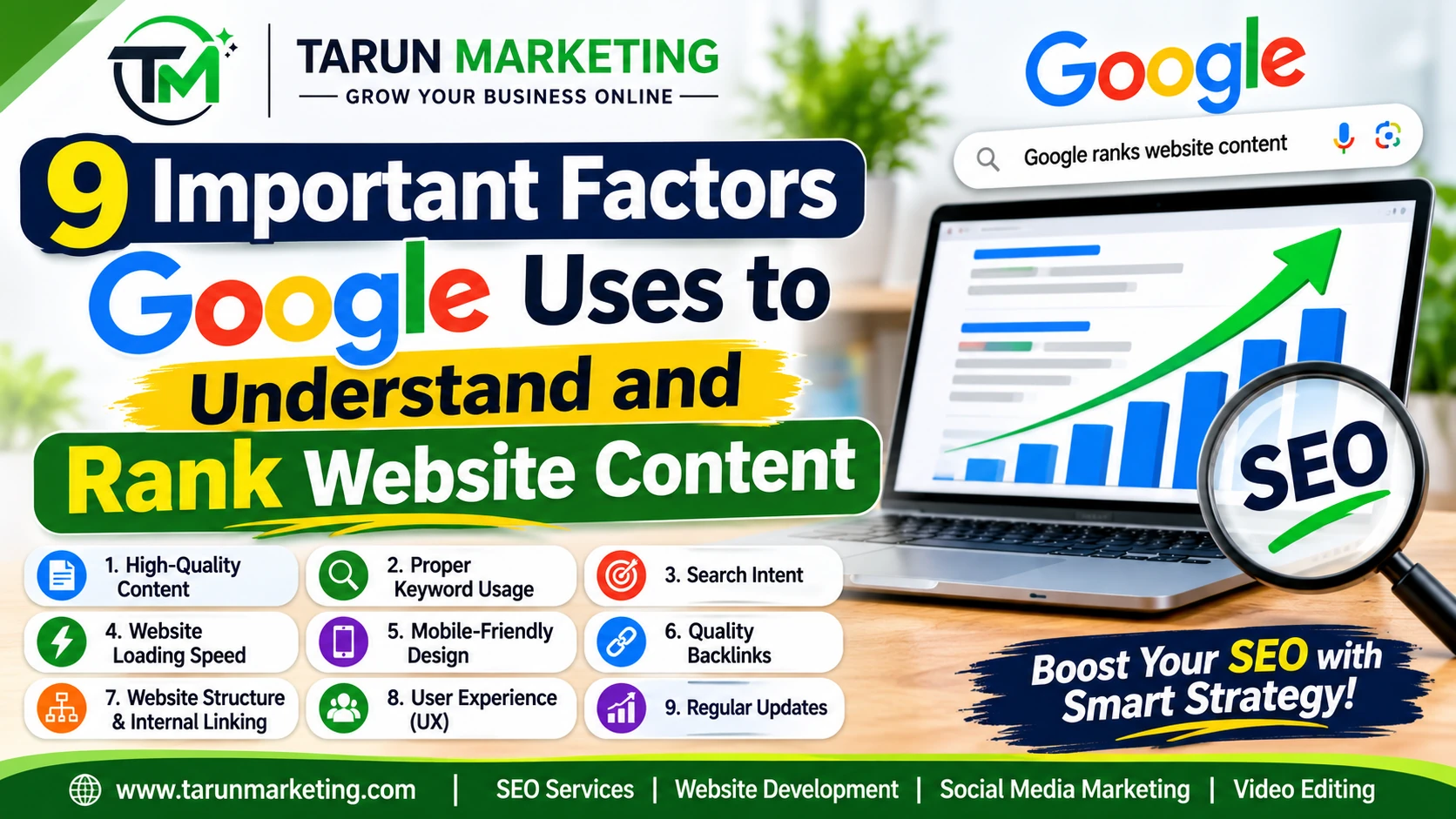
Understanding how Google ranks website content can help you create a better SEO strategy and improve your website’s performance in search results. In this article, we will discuss nine important factors that help Google understand and rank website content.
1. High-Quality and Helpful Content
High-quality content is one of the most important parts of a successful SEO strategy. Google aims to provide users with helpful, reliable and relevant information that answers their questions.
If you want to understand how Google ranks website content, start by creating original and informative articles. Your content should explain topics clearly and provide useful information instead of simply repeating the same keywords.
For example, if you have a digital marketing website, you can publish articles about SEO, website development, social media marketing and online business growth.
Try to include practical examples, useful suggestions and accurate information. Divide your articles into headings and short paragraphs so readers can easily understand them.
Avoid copying articles from other websites. Instead, focus on creating content that offers value to your audience. Helpful content gives visitors a reason to explore more pages on your website.
2. Proper Keyword Usage
Keywords are words and phrases that people enter into Google when searching for information, products or services.
For example, someone looking for digital marketing services may search for SEO services, website development company or social media marketing services.
Keywords help search engines understand the subject of a webpage. This is why proper keyword placement is an important part of understanding how Google ranks website content.
For better website content optimization, include your main keyword naturally in:
- SEO title
- Meta description
- First paragraph
- Relevant headings
- Main article content
- Image alt text, when appropriate
You should also include related keywords to provide more context about your topic.
For this article, the focus keyword is Google ranks website content. Using this phrase naturally in the article helps maintain consistency with the main topic.
However, avoid keyword stuffing. Repeating the same keyword unnecessarily can make your article difficult to read. Write for people first and search engines second.
3. Understanding Search Intent
Search intent means understanding what a person actually wants when searching on Google.
Every search has a purpose. Some people want information, while others want to compare services, visit a particular website or purchase something.
There are four common types of search intent:
- Informational: Users want answers or information about a topic.
- Navigational: Users are looking for a particular website.
- Commercial: Users want to compare products or services.
- Transactional: Users are ready to purchase something or take action.
For example, someone searching for “What is SEO?” wants information, while someone searching for “SEO services near me” may be looking for a service provider.
Your content should match the purpose behind the search. If someone wants a beginner’s guide, provide a detailed explanation instead of immediately promoting a service.
Understanding search intent helps you create relevant pages and gives you a better understanding of how Google ranks website content according to what users are searching for.
4. Website Loading Speed
Website loading speed affects how visitors experience your website. If a webpage takes too long to load, visitors may leave before reading your content.
A fast-loading website makes it easier for users to explore pages, read articles and contact your business.
You can improve website speed by following these practices:
- Compress large images before uploading them.
- Use reliable web hosting.
- Remove unnecessary WordPress plugins.
- Choose a lightweight website theme.
- Enable website caching.
- Reduce unnecessary scripts and animations.
- Keep your website software updated.
Also Read – How to Set a Performance Marketing Budget That Actually Gets Results
You can check your website performance using Google’s PageSpeed Insights tool.
Website speed is one part of page experience. Improving it can make your website more comfortable to use. It is also useful to understand this factor when learning how Google ranks website content.
However, a fast website alone cannot guarantee higher search rankings.
5. Mobile-Friendly Website Design
Many people use smartphones to browse websites, read articles and search for services. Therefore, mobile-friendly website design is important for every business.
A mobile-friendly website should have readable text, properly sized images, simple navigation and buttons that are easy to click.
For example, when someone visits your website using a mobile phone, they should be able to open service pages, read articles and contact your business without difficulty.
Google primarily uses the mobile version of website content for indexing and ranking. This makes responsive website design an important part of SEO.
When considering how Google ranks website content, remember that your website should provide a good experience across different screen sizes.
If you are creating a WordPress website, choose a responsive theme and check how your pages look on mobile devices.
For professional website design and development, explore our Website Development Services at Tarun Marketing.
6. Quality Backlinks
Backlinks are links from other websites that point to your website. They help search engines discover webpages and understand connections between different websites.
For example, if a relevant website publishes an article and includes a link to your blog post, visitors can follow that link to learn more about your topic.
Quality backlinks can support your SEO efforts and help build your website’s authority.
Here are some useful ways to earn backlinks:
- Publish informative and original articles.
- Write guest posts for relevant websites.
- Create useful guides and resources.
- Build relationships with other website owners.
- Share valuable information on appropriate platforms.
- Create content that other websites genuinely want to reference.
Always focus on relevant and trustworthy websites instead of buying large numbers of low-quality links.
Backlinks are one of the signals considered by Google. They are not a guarantee of a particular ranking position. Understanding their role can help you develop a stronger strategy for improving how Google ranks website content.
7. Proper Website Structure and Internal Linking
Website structure helps visitors and search engines navigate your website easily.
A well-organized website should have clear menus, relevant categories, useful pages and properly connected content.
Internal links connect one page of your website to another. For example, a blog post about SEO can link to your SEO service page. Similarly, an article about website design can link to your website development service.
Internal linking offers several benefits:
- Helps visitors discover related information.
- Makes website navigation easier.
- Helps search engines discover other pages.
- Connects related topics across your website.
- Guides visitors towards important service pages.
Use descriptive anchor text instead of generic phrases such as “click here.”
A clear website structure makes it easier for visitors to explore your website. It also helps search engines understand the relationship between different pages and their topics.
8. User Experience and Page Design
User experience refers to how easily visitors can use and interact with your website.
A professional website should have a clean layout, readable fonts, suitable colours and simple navigation. Visitors should be able to find important information without confusion.
Avoid unnecessary pop-ups, too many advertisements, distracting animations and complicated menus.
Business websites should clearly display their services, contact information and enquiry options. This makes it easier for potential customers to understand what your business offers.
Google also considers page experience signals, including Core Web Vitals, as part of its ranking systems.
When learning how Google ranks website content, remember that the overall experience of a webpage matters. Good design can encourage visitors to explore more pages, although attractive design alone cannot guarantee first-page rankings.
9. Regular Monitoring and Content Updates
SEO is not a one-time activity. Website owners should regularly monitor their website performance and update content when necessary.
Older articles may contain outdated information, broken links or missing details. Reviewing and updating these pages can make them more useful for visitors.
Google Search Console is a useful free tool that helps website owners monitor their website’s performance in Google Search.
You can use it to:
- Check website indexing.
- Monitor search queries.
- Review clicks and impressions.
- Identify certain technical issues.
- Submit XML sitemaps.
- Understand which pages receive search traffic.
Official external link: https://search.google.com/search-console/about
You should also check whether your website has broken links, missing images or technical problems.
Regular monitoring helps you understand how Google ranks website content and identify areas where your website may need improvement. It also helps you make informed decisions about your future SEO activities.
Conclusion
Understanding how Google ranks website content is important for every website owner who wants to improve online visibility and attract more visitors.
High-quality content, proper keyword usage, search intent, website speed, mobile-friendly design, quality backlinks, internal linking, user experience and regular monitoring all contribute to a strong SEO foundation.
There is no single trick that guarantees first-page rankings. SEO requires consistent effort, helpful content and continuous website improvements.
At Tarun Marketing, we help businesses improve their online presence through SEO, website development, social media marketing and video editing services.
If you want to understand how Google ranks website content and improve your website’s search performance, start by following these nine factors.
Want to improve your website’s visibility on Google? Explore Tarun Marketing’s services and take the next step towards growing your online business.
