

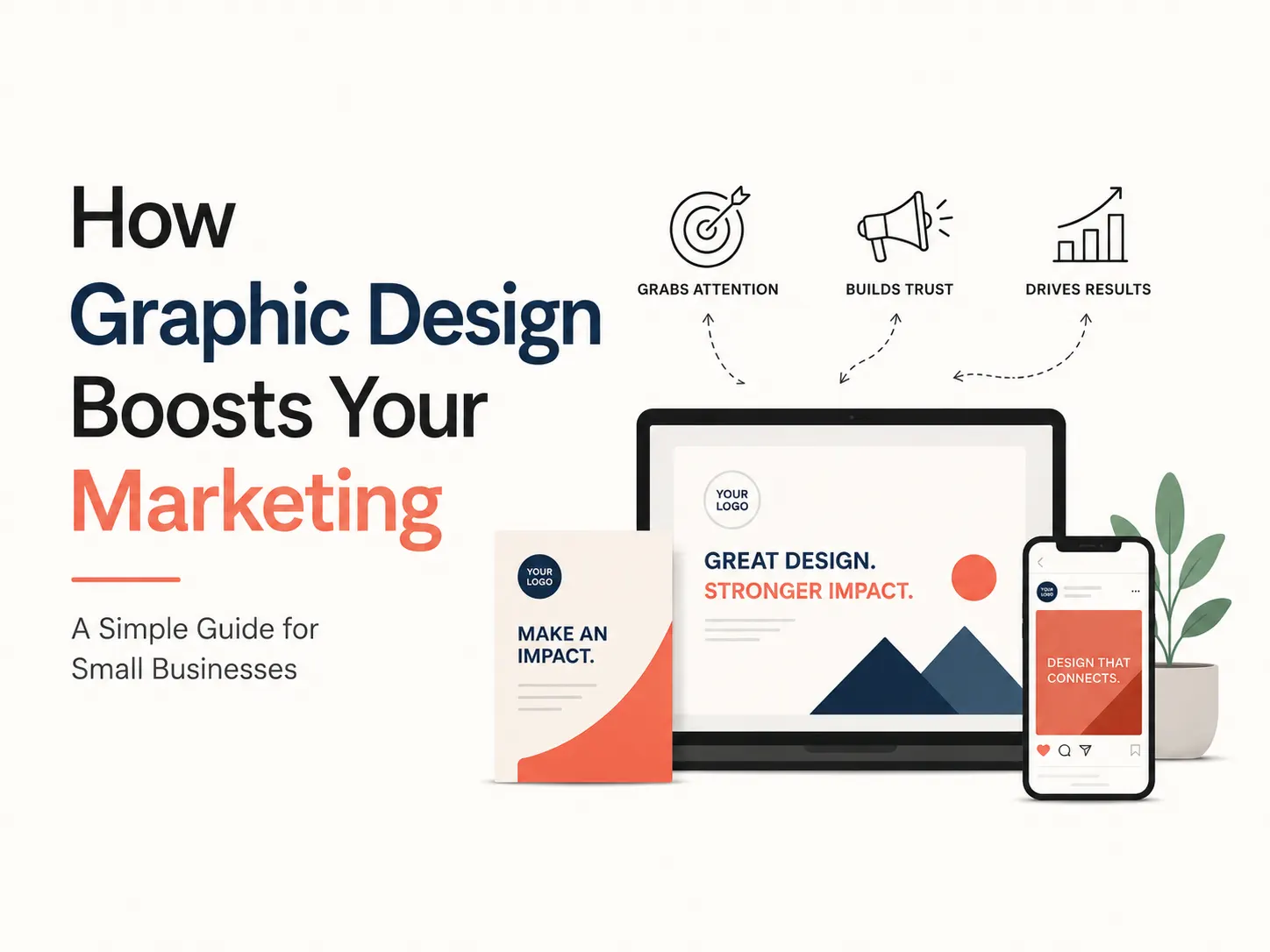
How Graphic Design Boosts Your Marketing: Smart Strategies for Small Businesses
If you run a small business, you’ve probably heard people say “branding matters” or “design matters.” But what does that actually mean for your sales, your customers, and your growth?
Here’s the simple truth: good graphic design is not decoration. It’s a marketing tool. It helps people trust you, remember you, and choose you over your competitors.
In this guide, we’ll break down exactly how graphic design and marketing work together, using plain language and real examples — no jargon.
1. First Impressions Happen in Seconds
Studies show people form an opinion about a website, logo, or ad within 50 milliseconds. That’s faster than a blink.
This means your design is often the first thing that decides whether someone stays or leaves. A messy, outdated, or unclear design tells people “this business might not be professional.” A clean, modern design tells people “this business knows what it’s doing.”
Example: Two bakeries post the same offer on Instagram. One uses a blurry phone photo with plain text. The other uses a well-designed graphic with clear fonts, brand colors, and a nice layout. Which one gets more likes, shares, and orders? Almost always, the second one.
2. Design Builds Trust Before You Say a Word
People buy from businesses they trust. And trust is built visually before it’s built through words.
Think about it:
- A logo that looks professional signals stability.
- Consistent colors and fonts across your website, social media, and packaging signal organization.
- Clear, readable design signals honesty (nothing is hidden or confusing).
This is why big brands spend so much money on design — not because it looks nice, but because it quietly convinces people to trust them.
3. Good Design Makes Your Message Clear
Marketing is about communication. If your design is cluttered or confusing, your message gets lost — even if the offer is great.
Simple design rules that instantly improve communication:
- One main message per graphic. Don’t try to say five things in one image.
- Contrast matters. Text should be easy to read against the background.
- White space is your friend. Empty space makes important elements stand out.
- Consistent fonts and colors make your brand instantly recognizable.
When design is clean, people understand your offer faster — and faster understanding means faster decisions to buy.
4. Design Increases Engagement on Social Media
Social media platforms are visual by nature. Posts with strong, professional graphics get more:
- Likes and shares
- Comments
- Saves
- Click-throughs to your website
A well-designed carousel post, reel cover, or ad creative can be the difference between someone scrolling past you or stopping to look.
Tip: Even simple posts (like a quote, tip, or offer) perform much better when designed with brand colors, clear fonts, and a balanced layout — compared to plain text on a plain background.
5. Consistent Branding Makes You Memorable
Imagine seeing a brand’s Instagram post, then their website, then their packaging — and they all look completely different. Confusing, right?
Now imagine the opposite: same colors, same fonts, same style everywhere. That consistency helps people recognize your brand instantly, even without seeing your name.
This is called brand recall, and it’s one of the most powerful (and most underrated) marketing advantages a small business can have.
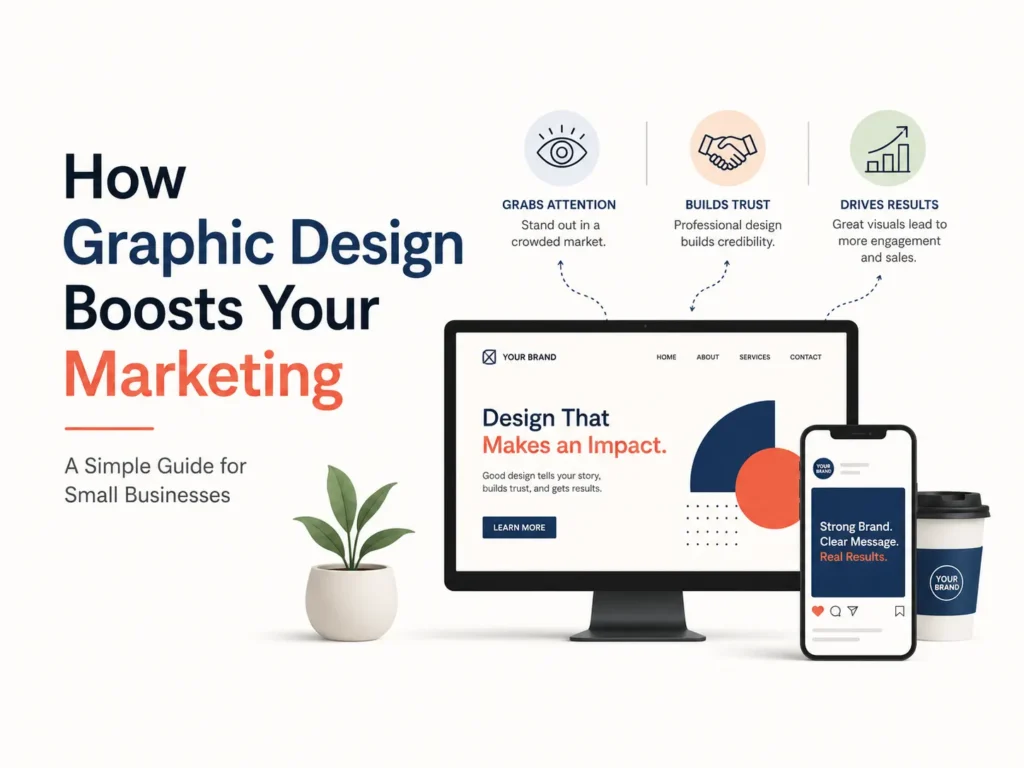
6. Design Directly Affects Conversions
This is the part business owners care about most: does design actually increase sales?
Yes — because design affects:
- How clear your call-to-action is (e.g., “Buy Now” button visibility)
- How trustworthy your website looks
- How easy your product/service is to understand
- How professional your ads appear
A poorly designed landing page can lose customers even if the product is excellent. A well-designed one can convert visitors into paying customers.
7. You Don’t Need a Huge Budget — Just the Right Strategy
Many small business owners think good design is only for big brands with big budgets. That’s not true.
What matters more than budget is:
- Consistency across platforms
- Clarity in your message
- A design style that matches your brand personality
- Professional execution (even simple designs, done well, look premium)
This is exactly where working with a dedicated graphic design and marketing partner — like Tarun Marketing — makes a difference. Instead of guessing with templates, you get designs built around your brand and your goals.
Final Thoughts
Graphic design isn’t just about looking pretty — it’s a core part of your marketing strategy. It builds trust, communicates your message clearly, increases engagement, and ultimately drives more sales.
If your business hasn’t invested in strong, consistent design yet, now is a great time to start. Small improvements in your visuals can lead to big improvements in how customers perceive — and choose — your brand.
FAQ
Q1. Why is graphic design important for marketing? Graphic design helps communicate your message clearly, builds trust with your audience, and makes your brand more memorable — all of which directly support your marketing goals.
Q2. How much should a small business spend on design? There’s no fixed number. What matters most is consistency and quality, not a huge budget. Even a small, well-planned design investment can significantly improve how your brand is perceived.
Q3. What’s the difference between branding and graphic design? Branding is your business’s overall identity — your values, voice, and personality. Graphic design is the visual expression of that identity (logos, colors, fonts, layouts, etc.).
Q4. How often should I update my brand’s design? You don’t need to redesign often. However, refreshing your design every few years — or when your business goals change — helps keep your brand feeling current.
Q5. Can good design really increase sales? Yes. Clear, professional design builds trust and makes it easier for customers to understand your offer, which directly impacts conversions and sales.
Q6. Do I need a professional designer, or can I do it myself? DIY tools can work for very basic needs, but a professional ensures consistency, strategy, and quality — especially important as your brand grows and competes for attention.
Q7. How can Tarun Marketing help my business? Tarun Marketing combines graphic design and marketing strategy to help small businesses build a consistent, trustworthy, and engaging brand presence across websites, social media, and advertising.
Here are some additional FAQs focused on “Graphic Design” that would work well alongside your existing set — good for SEO and covering angles you haven’t touched yet:
Q8. What is graphic design?
Graphic design is the practice of using visual elements — like typography, color, imagery, and layout — to communicate ideas and messages effectively. It’s used across logos, websites, social media, packaging, and advertising to give a brand a cohesive visual identity.
Q9. What skills does a good graphic designer need?
A strong graphic designer combines creativity with technical skill — typography, color theory, layout, and software proficiency — along with an understanding of marketing and how design influences customer behavior.
Q10. What file formats should I ask my designer for?
Ask for both editable source files (like AI, PSD, or Figma) and ready-to-use exports (like PNG, JPG, PDF, or SVG). This ensures you can reuse and resize your designs without losing quality later.
Q11. Why does consistent graphic design matter across platforms?
When your colors, fonts, and style stay consistent across your website, social media, and print materials, customers recognize your brand faster and trust it more. Inconsistency can make a business look unprofessional or unreliable.
Q12. How does graphic design affect first impressions?
Design is often the first thing people notice about your business — before they read a single word. Clean, professional visuals signal credibility, while poor design can make even a great product seem untrustworthy.
Q13. What’s the difference between logo design and full brand design?
A logo is just one piece of your visual identity. Full brand design includes your logo plus a complete system — color palette, typography, imagery style, and guidelines — that gets applied consistently across everything you create.
Q14. Can graphic design help with social media marketing?
Absolutely. Well-designed social media graphics improve engagement, make posts more shareable, and reinforce brand recognition every time someone sees your content in their feed.
Q15. What should I look for when hiring a graphic designer?
Look at their portfolio for versatility and quality, ask how they approach brand strategy (not just aesthetics), and check that their communication style fits how you like to work.
