

Find the Best Social Media Marketing Agency Near Me
Choosing a local social media partner is about more than finding someone who can post consistently. The right agency should understand your market, clarify your goals, build content that fits your audience, and measure what actually moves your business forward. If you have been searching for a social media marketing agency near me, this guide will help you compare options with more confidence and avoid choosing based on convenience alone.
What should you look for in a local social media agency?
Look for a team that combines local market awareness, clear strategy, creative execution, reporting discipline, and honest communication. A strong agency should be able to explain how its social media services support your business goals, whether you want more brand awareness, stronger community engagement, better lead generation, or improved customer trust.
Local knowledge can be valuable because audiences do not respond to every message the same way in every city, region, or industry. A nearby agency may understand local events, buying patterns, neighborhood culture, and competitive noise more naturally than a remote team with no connection to your area. Still, location is only one factor. The best choice is the agency that can turn that local insight into a practical plan.
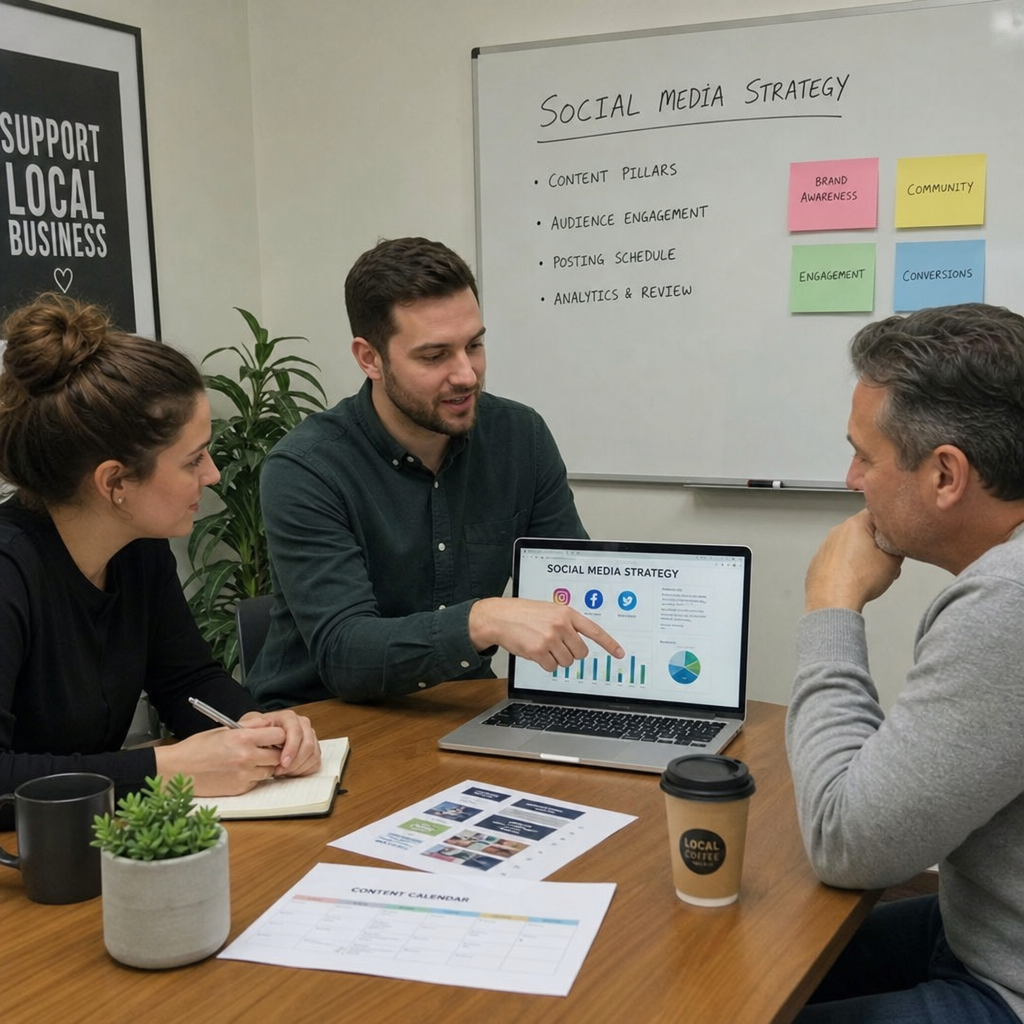
Local expertise turns strategy into relevance
Many businesses start with a broad search like marketing firms near me or social media marketing services near me because they want someone accessible. That is a reasonable starting point, but your shortlist should quickly move beyond proximity. Ask how each agency researches your customers, studies competitors, and adapts messaging for different platforms.
A capable local agency should understand that a restaurant, law firm, boutique, medical practice, contractor, and nonprofit all need different approaches. They should not recommend the same posting calendar or content style for every client. Good strategy starts with context: who you serve, what you offer, why customers choose you, and what barriers stop people from taking action.
The most useful local expertise often shows up in small but important decisions, such as:
- Which community events or seasonal moments are worth mentioning
- What tone feels natural for your audience
- Which local competitors are gaining attention and why
- How to feature real staff, locations, products, or customer experiences
- When local advertising can support organic content
- Which calls to action feel appropriate for your buying cycle
When an agency can discuss these details clearly, you are more likely to get social media that feels connected to your business instead of generic content that could belong to anyone.
Strategy should come before posting
It is easy to judge social media by visible activity: the number of posts, the design style, or how often a brand appears online. But activity without direction rarely produces meaningful progress. A reliable digital marketing agency should begin with goals, audience research, positioning, and a realistic content plan before discussing captions or graphics.
A strategy does not need to be complicated, but it should answer several practical questions. Who are you trying to reach? What do they need to believe before they contact you, visit your store, book a service, or make a purchase? Which platforms actually fit your audience? What kind of content will educate, reassure, entertain, or motivate them?
A strong social media strategy often includes:
- Business goals that connect social media activity to outcomes, such as inquiries, appointments, visits, applications, or repeat purchases.
- Audience profiles that describe customer needs, concerns, motivations, and common questions.
- Platform priorities so your team does not waste time trying to be everywhere at once.
- Content pillars that guide recurring themes, such as education, proof, behind-the-scenes content, offers, community involvement, and customer support.
- Measurement plans that define which numbers matter and how often performance will be reviewed.
If an agency jumps straight into posting volume without asking about your business model, audience, or sales process, that is a warning sign. Social media should support a larger marketing direction, not operate as a disconnected task list.
How do social media consultants differ from full-service agencies?
Social media consultants usually provide guidance, audits, strategy, training, or advisory support, while full-service agencies typically handle ongoing execution such as content creation, scheduling, community management, paid campaigns, and reporting. The right choice depends on whether you need expert direction, hands-on production, or a combination of both.
A consultant may be ideal if you already have an internal team that can create content but needs a better roadmap. They can review your accounts, identify weaknesses, train your staff, and help you build a repeatable system. This approach can work well for businesses that want to keep the brand voice closely managed in-house.
A full-service agency is often a better fit when your team lacks time, design resources, copywriting support, video skills, or campaign management experience. In that case, the agency becomes an extension of your marketing operation. They may plan campaigns, write captions, design visuals, edit short-form videos, respond to comments, manage ads, and provide performance reports.
Some businesses benefit from a hybrid model. For example, an agency might create monthly strategy and content while your internal team captures real-time photos, answers direct messages, or approves industry-sensitive posts. The key is to define responsibilities before work begins so nothing falls through the cracks.
Services that matter most for growing brands
Not every business needs every social media feature. A local retailer may need visual content and promotions, while a professional service firm may need educational posts that build trust over time. When comparing providers, focus on the social media services that match your goals instead of choosing the longest service list.
Common services include:
- Social media strategy: Goal setting, platform selection, audience research, content planning, and campaign direction.
- Content creation: Captions, graphics, photography direction, short-form video concepts, and branded templates.
- Content scheduling: Publishing posts consistently at planned times across selected platforms.
- Community management: Monitoring comments, messages, reviews, and audience interactions within agreed guidelines.
- Paid social advertising: Building campaigns to reach targeted audiences, promote offers, drive traffic, or generate leads.
- Analytics and reporting: Explaining performance, identifying trends, and recommending improvements.
- Profile optimization: Improving bios, links, highlights, contact details, pinned posts, and visual consistency.
The most valuable agencies explain why each service matters. For example, reporting is not just a monthly document; it should help you understand what content earns attention, what drives action, and what should change next. Community management is not just replying to comments; it protects your reputation and helps people feel heard.
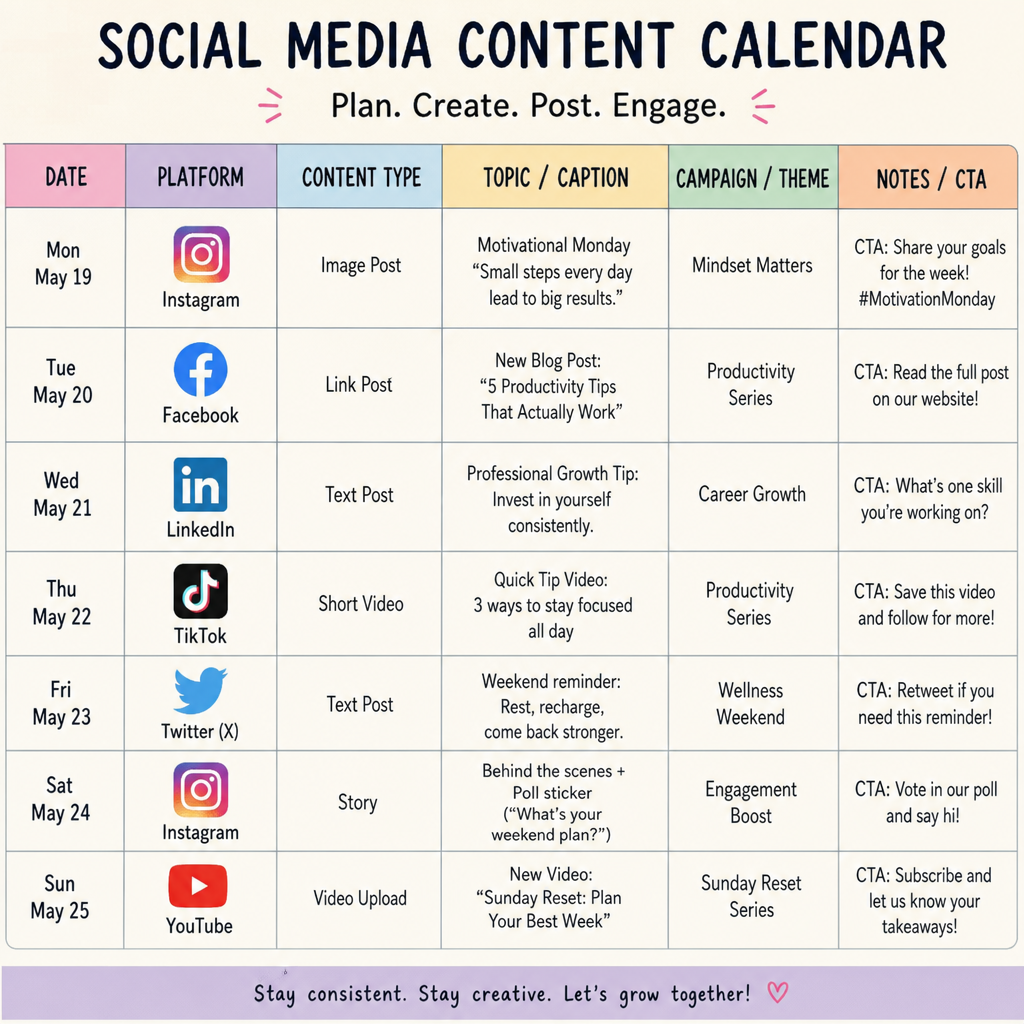
Proof of process is more useful than big promises
When comparing social media experts, pay close attention to how they talk about results. Social media can support business growth, but no agency should guarantee vague outcomes without understanding your budget, market, offer, audience, and sales process. Confident professionals can describe their process clearly without overselling.
Ask for examples of how they think, not just examples of attractive posts. A polished feed is helpful, but it does not prove strategy. You want to know whether the agency can identify the purpose behind each campaign, explain why specific content worked, and show how decisions were made.
Useful questions include:
- What does your onboarding process include?
- How do you learn about our audience and competitors?
- How do you decide which platforms deserve attention?
- Who creates the content, and who approves it?
- How often will we meet or review performance?
- What metrics do you consider most important for our goals?
- How do you handle negative comments or sensitive topics?
- What do you need from our team each month?
The answers should feel specific and practical. If every response sounds like a script, keep looking. Strong agencies are usually comfortable discussing tradeoffs, timelines, and the limits of what social media can do on its own.
Local search is only the starting point
Searching for a social media marketing agency near me can help you discover nearby options, but it should not be your only filter. A convenient location is useful for meetings, photo shoots, local campaigns, and relationship building. However, the agency still needs the right skills, capacity, communication style, and understanding of your industry.
Once you have a list, review each agency with a consistent process:
- Scan their own social presence. It does not need to be perfect, but it should show clarity, consistency, and professionalism.
- Review their service descriptions. Look for substance, not just trendy language.
- Check their portfolio or examples. Consider whether their work fits your brand standards and customer expectations.
- Ask about collaboration. Find out how much input they need and how approvals are handled.
- Discuss reporting. Make sure you will receive insights, not just numbers.
- Clarify scope. Understand what is included, what costs extra, and what your team must provide.
This process helps you compare agencies fairly. It also prevents you from choosing the first result that appears when you search for social media marketing services near me.
Red flags to watch before you sign
A poor agency fit can waste time, budget, and momentum. While every provider has a different style, certain warning signs should make you pause. The biggest red flag is a lack of curiosity. If an agency does not ask about your customers, goals, offers, brand voice, or sales process, it may not be prepared to create meaningful work.
Be cautious if you notice:
- Promises of instant results without context
- One-size-fits-all packages with no strategic discussion
- Heavy focus on vanity metrics while ignoring business goals
- Unclear ownership of content, accounts, or creative assets
- No defined approval process
- Reports that show numbers but offer no interpretation
- Poor communication during the sales process
- Reluctance to explain who will actually work on your account
The early conversation often reflects the future relationship. If the agency is disorganized before you become a client, it may be disorganized after the contract begins too.
The best agency relationship feels collaborative
Even the strongest agency cannot create great content in isolation. Your business has the stories, expertise, staff, customers, products, and daily moments that make social media feel real. The agency’s job is to shape those raw materials into a consistent, strategic presence.
A healthy partnership usually includes regular communication, clear expectations, and shared accountability. Your team may need to provide photos, approve content, answer technical questions, share promotions, or alert the agency to schedule changes. The agency should bring planning, creative direction, platform knowledge, and performance insights.
The best relationships also improve over time. As the agency learns what your audience responds to, content becomes sharper and more efficient. Reporting becomes more useful because both sides understand what they are trying to accomplish.
Final takeaway
Finding the right local social media partner starts with search, but it ends with fit. Use terms like social media marketing agency near me, marketing firms near me, and digital marketing agency to build your initial list, then evaluate each option by strategy, process, communication, and relevance to your goals.
The best agency will not simply promise more posts. It will help you show up with purpose, speak to the right audience, and turn social media into a stronger part of your overall marketing system.
