

10 Essential Business Website Pages
Your business website is more than just an online presence—it is a powerful tool that helps attract visitors, build trust, and generate leads. However, many businesses launch a website without including the pages customers actually expect to see.
Having the right website pages improves user experience, increases credibility, supports SEO, and makes it easier for visitors to take action. Whether you own a small business, startup, or growing company, creating the right pages can help your website perform better.
In this guide, you’ll discover the 10 essential business website pages every company should have to build trust, improve search engine visibility, and convert more visitors into customers.
Why Are Business Website Pages Important?
Every page on your website serves a specific purpose. Together, these pages help visitors learn about your business, understand your services, and contact you with confidence.
Some key benefits include:
- Better user experience
- Improved SEO performance
- Higher customer trust
- Increased lead generation
- Clear business information
- Better website navigation
- Higher conversion rates
- Stronger online credibility
Well-planned business website pages make your website easier to use while helping search engines understand your content.
1. Home Page
The Home Page is often the first page visitors see. It should immediately explain who you are, what your business offers, and why customers should choose you.
A good Home Page should include:
- Clear business introduction
- Strong headline
- Brief overview of services
- Call-to-Action button
- Customer trust elements
- Easy navigation
A professional Home Page encourages visitors to explore the rest of your website.
2. About Us Page
Customers want to know who they’re doing business with. An About Us page helps build credibility by sharing your company’s story and values.
Include information such as:
- Business history
- Mission and vision
- Company values
- Team introduction
- Experience and achievements
An authentic About Us page creates trust and strengthens your brand identity.
3. Services Page
Your Services Page should clearly explain what your business offers.
Each service should include:
- Service description
- Key benefits
- Industries served
- Process overview
- Call-to-Action
Instead of listing services only, explain how each one solves customer problems.
4. Contact Page
A Contact Page makes it easy for potential customers to reach your business.
Include:
- Contact form
- Phone number
- Email address
- Office address
- Business hours
- Google Maps (if applicable)
The easier you make communication, the more inquiries you’re likely to receive.
5. Blog Page
A blog helps your business share valuable information while improving SEO.
Regular blog posts can:
- Answer customer questions
- Improve Google rankings
- Increase website traffic
- Build authority
- Generate organic leads
Publishing useful content consistently keeps your website active and informative.
Also Read – What web development services does a business really need?
6. Testimonials Page
Customer reviews build confidence among new visitors.
Your Testimonials Page can include:
- Customer reviews
- Success stories
- Ratings
- Client feedback
- Before-and-after results (if applicable)
Positive testimonials help reassure visitors that your business delivers quality results.
7. Portfolio or Projects Page
If your business provides services, showcasing previous work is one of the best ways to demonstrate expertise.
Include:
- Completed projects
- Case studies
- Project images
- Client outcomes
- Brief project descriptions
A strong portfolio helps potential clients understand the quality of your work.
8. FAQ Page
An FAQ page answers common customer questions before they contact you.
Common topics include:
- Pricing
- Services
- Delivery process
- Support
- Payment methods
- Timelines
This page saves time for both your business and your customers while improving user experience.
9. Privacy Policy Page
A Privacy Policy Page explains how your business collects, stores, and protects customer information. It also helps build trust and supports compliance with privacy regulations.
Your Privacy Policy should include:
- Information collected
- How customer data is used
- Cookie policy
- Third-party services
- Data protection practices
- Contact information
Including this page makes your Website more trustworthy and professional.
10. Terms and Conditions Page
A Terms and Conditions page outlines the rules for using your website and services. While many businesses overlook it, this page helps protect both your company and your customers.
It should cover:
- Website usage terms
- Payment conditions
- Refund policy (if applicable)
- Intellectual property rights
- Limitations of liability
- User responsibilities
Having clear terms improves transparency and reduces potential disputes.
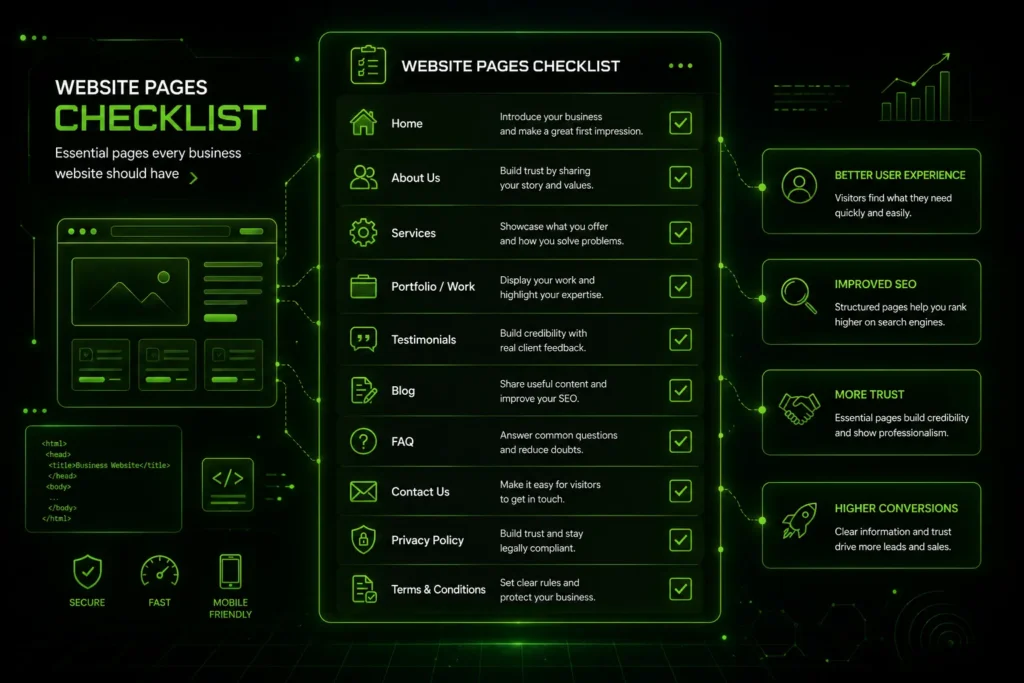
Business Website Pages Checklist
Before publishing your website, make sure it includes the following essential pages:
- Home Page
- About Us Page
- Services Page
- Contact Page
- Blog Page
- Testimonials Page
- Portfolio or Projects Page
- FAQ Page
- Privacy Policy Page
- Terms and Conditions Page
Having these essential Website Pages creates a complete, professional website that supports both users and search engines.
Common Mistakes to Avoid
Many businesses create websites but forget important pages that improve trust and usability.
Avoid these common mistakes:
- Publishing a website without an About Us page
- Making it difficult for customers to contact you
- Not adding a blog section
- Ignoring customer testimonials
- Missing Privacy Policy and Terms pages
- Using confusing navigation
- Keeping outdated business information
- Forgetting clear Call-to-Action buttons
Avoiding these mistakes helps visitors find information quickly and encourages them to engage with your business.A successful website should always focus on providing accurate information, clear navigation, and an excellent user experience. Regular updates, fast loading speed, mobile-friendly design, and simple layouts help visitors find what they need quickly. These improvements also increase customer satisfaction and encourage people to stay on your website longer.
Conclusion
Creating a professional website is not just about attractive design. Including the right business website pages helps visitors understand your business, trust your services, and take action with confidence.
From your Home Page to your Contact Page, Blog, Portfolio, and legal pages, every section plays an important role in improving user experience, supporting SEO, and increasing conversions.
By building these 10 essential business website pages, your business can create a stronger online presence, improve customer trust, and generate more opportunities for long-term growth.
Regularly review and update your website to ensure every page contains accurate information, reflects your latest services, and continues to meet your customers’ needs.
Frequently Asked Questions (FAQs)
1. What are business website pages?
Business website pages are the essential pages that provide information about your company, services, contact details, policies, and other important content that helps visitors navigate your website.
2. Why are business website pages important?
Well-designed website pages improve user experience, build credibility, support SEO, and help convert website visitors into customers.
3. Which page is the most important on a business website?
The Home Page is usually the most important because it creates the first impression and guides visitors to the information they need.
4. How often should business website pages be updated?
Review your website pages regularly and update them whenever your services, business information, pricing, contact details, or policies change to keep your website accurate and trustworthy.
