
How Search Engine Marketing Work?
A Complete Beginner’s Guide for Small Businesses — by Tarun Marketing
If you’ve ever searched for something on Google and clicked on an ad at the top of the results, you’ve already experienced Search Engine Marketing (SEM) in action. For small business owners trying to grow online, understanding this strategy can be the difference between wasting money on ads and building a steady stream of paying customers.
In this guide, we’ll break down exactly what it is, how it works, why it might be the missing piece in your digital marketing plan, and how to avoid the common traps that eat up ad budgets without delivering results.
What is SEM?
It’s a form of digital marketing that increases your website’s visibility on search engine results pages (SERPs) through paid advertising. When someone searches for a product or service you offer, this approach helps your business show up right at the top — above the organic search results.
Unlike SEO, which focuses on earning free, organic traffic over time, this method uses paid ads (most commonly through Google Ads, and sometimes Microsoft Advertising for Bing) to get instant visibility. Think of it as the fast lane to the top of search results — you’re essentially renting the top spot instead of earning it slowly through content and backlinks.
For a small business owner, this matters because you often can’t afford to wait six months for organic rankings to kick in. A well-run paid campaign can start sending qualified visitors to your website on day one.
How Does It Work?
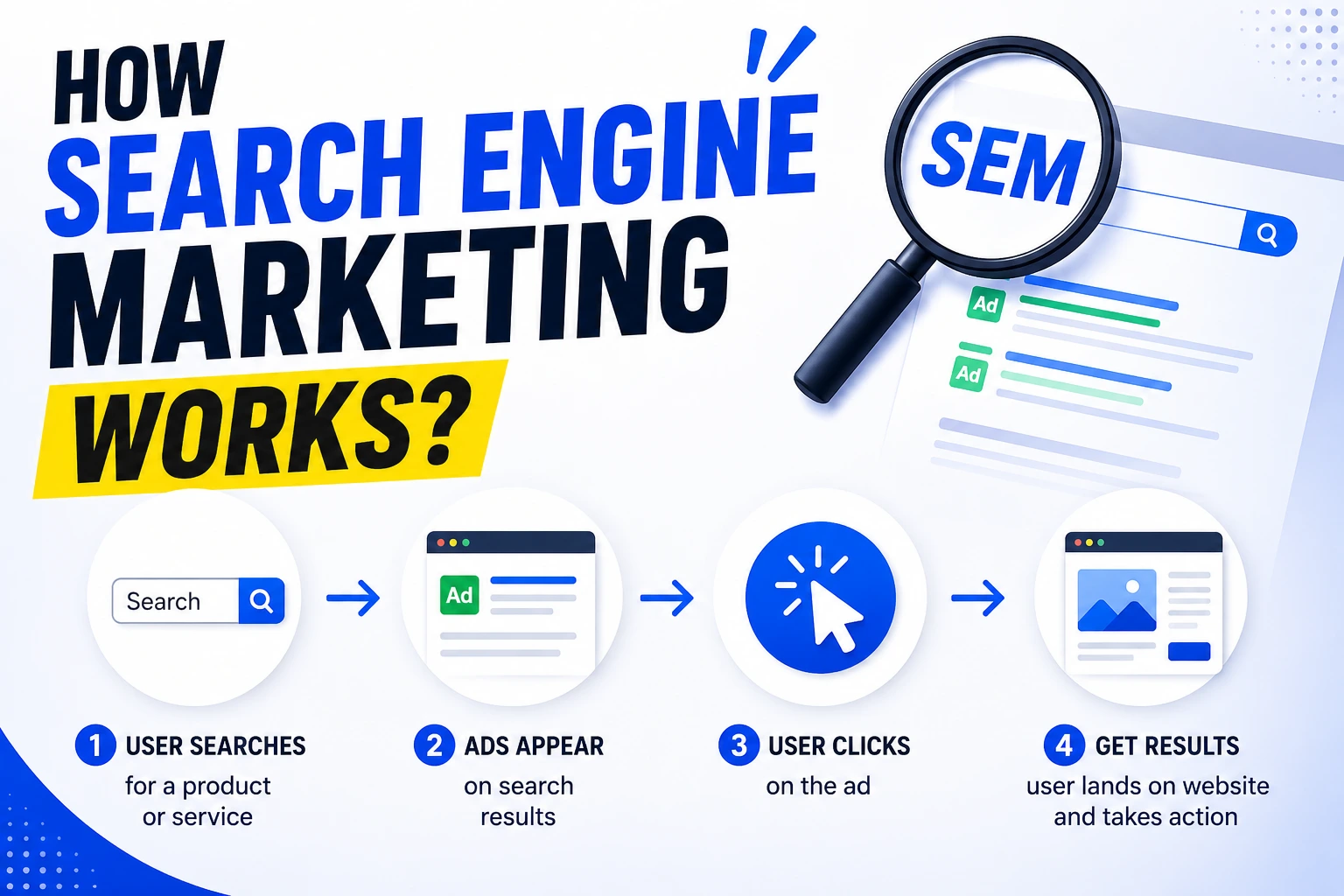
Paid search campaigns typically run on a pay-per-click (PPC) model. Here’s how it works in simple terms:
- You choose keywords relevant to your business (e.g., “digital marketing agency in Punjab”)
- You create an ad and set a budget
- You only pay when someone actually clicks your ad
- Google ranks your ad based on your bid amount and ad quality
Behind the scenes, every time someone searches a term you’re bidding on, Google runs an instant auction. It looks at how much you’re willing to pay, combined with your Quality Score — a rating based on your ad’s relevance, expected click-through rate, and landing page experience. This is why the highest bidder doesn’t always win the top spot; a smaller business with a highly relevant, well-optimized ad can often outrank a bigger competitor while paying less per click.
The higher your ad quality and relevance, the less you often pay per click — even against competitors with bigger budgets. This is one of the most overlooked advantages for small businesses: you’re not just buying visibility, you’re being rewarded for relevance.
Why Small Businesses Should Care
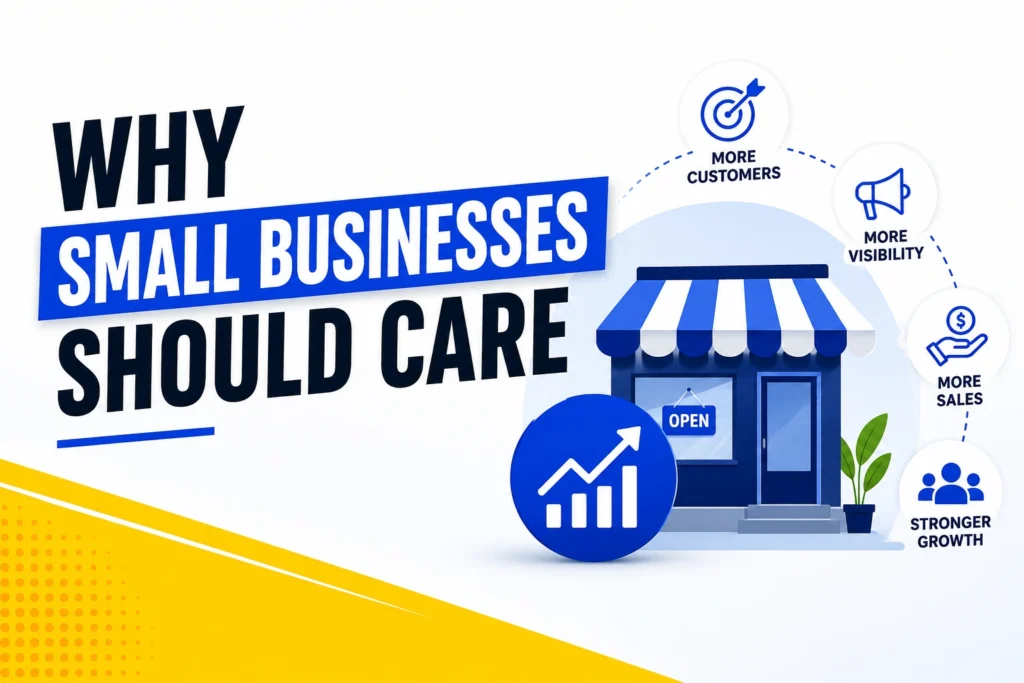
1. Immediate Results SEO can take months to show results. This approach can get your business on page one within hours of launching a campaign, which is especially valuable for seasonal offers, new product launches, or time-sensitive promotions.
2. Highly Targeted Traffic You can target by location, device, time of day, and even the specific words people search. This means your ad budget reaches people who are actually looking for what you offer, rather than being shown to a broad, uninterested audience the way traditional advertising often is.
3. Measurable ROI Every click, impression, and conversion is trackable. You’ll know exactly how much you’re spending to gain a customer, which makes it far easier to justify your marketing spend and plan future budgets with confidence.
4. Great for Local Businesses If you run a local business, paid search lets you appear specifically for people searching in your city or nearby areas — perfect for driving foot traffic or local leads. Features like location extensions and call extensions can turn a simple search into a phone call or store visit within minutes.
5. Full Control Over Budget and Timing You decide exactly how much to spend per day, which days and hours your ads run, and when to pause or scale a campaign. This level of control is difficult to replicate with most other forms of advertising.
SEM vs SEO: What’s the Difference?
A lot of business owners confuse the two, so here’s a quick breakdown:
| SEM | SEO |
|---|---|
| Paid traffic | Organic (free) traffic |
| Fast results | Takes time to build |
| Costs stop when budget ends | Long-term, sustainable |
| Great for short-term campaigns | Great for long-term brand authority |
| Visibility tied to ad spend | Visibility tied to content and authority |
The best digital marketing strategies usually combine both — paid search for quick wins, SEO for long-term growth. Many successful businesses use paid campaigns to generate revenue in the short term while their organic rankings are still being built, then gradually shift budget as SEO gains traction.
Key Components of a Successful Campaign
- Keyword Research — Finding the right search terms your customers actually use, including long-tail phrases that show clear buying intent
- Compelling Ad Copy — Writing ads that grab attention, highlight a clear benefit, and drive clicks
- Landing Page Optimization — Making sure the page people land on is fast, relevant, and designed to convert
- Bid Management — Setting the right budget and bid strategy to maximize ROI without overspending
- Continuous Monitoring — Regularly checking performance and adjusting campaigns based on real data, not guesswork
Common Mistakes to Avoid
- Ignoring negative keywords — Not excluding irrelevant searches wastes your budget on clicks that were never going to convert
- Sending traffic to a generic homepage — Always use a targeted landing page that matches the ad’s promise
- Setting and forgetting campaigns — Paid campaigns need regular optimization to stay effective as competition and costs shift
- Focusing only on clicks, not conversions — More clicks don’t always mean more sales; track what happens after the click
- Spreading budget too thin — Trying to target every possible keyword often performs worse than focusing on a smaller set of high-intent terms
Getting Started
If you’re new to this, start small. Choose one campaign with a clear goal — like generating leads or driving sales — and a modest daily budget. Track your results closely for the first few weeks, then scale what’s working.
A simple way to begin is to pick 5–10 highly relevant keywords, write two or three ad variations to test against each other, and give the campaign at least two to three weeks before making major changes. Search platforms need time and data to optimize delivery, so early patience often pays off.
For many small businesses, however, managing campaigns effectively requires ongoing expertise — from keyword strategy to ad copywriting to conversion tracking. This is where partnering with a digital marketing agency like Tarun Marketing can save you time and maximize your return on ad spend.
Final Thoughts
Search Engine Marketing is one of the fastest ways to get your business in front of ready-to-buy customers. While it does require investment, a well-managed campaign can deliver measurable, scalable results for your business — often faster than any other channel.
Ready to get your business found by the right customers? Tarun Marketing offers expert campaign management to help you get more clicks, leads, and sales — without wasting your ad budget.
Frequently Asked Questions (FAQs)
1. What’s the difference between SEM and PPC? SEM is the broader strategy of marketing through search engines, while PPC (pay-per-click) is the specific payment model used within these campaigns.
2. How much does it cost? Costs vary widely based on industry, competition, and keywords, but most businesses start with a daily budget as low as Rs. 500–1000 and scale up based on performance.
3. How long does it take to see results? Unlike SEO, paid search can show results almost immediately — often within a few hours to days of launching a campaign.
4. Do I need a big budget to start? No. It’s flexible and works with small budgets. The key is smart targeting and continuous optimization rather than just spending more.
5. Can I run both SEM and SEO at the same time? Yes, and it’s actually recommended. Paid search drives quick traffic while SEO builds long-term organic visibility — together they create a stronger overall strategy.
6. How do I know if my campaign is actually working? Track key metrics like click-through rate, cost per click, and — most importantly — conversion rate. A campaign that gets lots of clicks but few conversions usually needs landing page or targeting adjustments, not more budget.
7. What is Search Engine Marketing used for?
Search Engine Marketing is used to drive fast, targeted traffic to a website by placing paid ads on search engine results pages, helping businesses generate leads, sales, and brand visibility quickly.
8. Is Search Engine Marketing the same as Google Ads?
Not exactly. Google Ads is the platform most commonly used to run Search Engine Marketing campaigns, but Search Engine Marketing is the broader strategy — it can also include other ad networks like Microsoft Advertising.
9. Who should use Search Engine Marketing?
Any business that wants quick visibility on search engines — especially small businesses, local service providers, and e-commerce stores — can benefit from Search Engine Marketing.
10. Can Search Engine Marketing help a new website with no traffic?
Yes. Since it doesn’t rely on existing domain authority or rankings, Search Engine Marketing is one of the fastest ways for a brand-new website to start getting visitors.
