

10 Powerful Marketing Colors That Influence Customers
Colors do much more than make a brand look attractive. They influence emotions, shape customer perceptions, and even affect purchasing decisions. Businesses use Marketing Colors strategically to create memorable brands, improve customer engagement, and increase conversions.
Whether you’re designing a logo, website, advertisement, or product packaging, choosing the right color can make a significant difference. Every color sends a psychological message that influences how customers feel about your brand.
In this guide, you’ll discover the 10 most effective marketing colours and how each one impacts customer behavior.
Why Are Marketing Colors Important?
Customers often form first impressions within seconds, and color plays a major role in that decision.Strong branding also helps businesses build lasting customer loyalty over time. The right colors help businesses communicate their personality, build trust, and stand out from competitors.
Some major benefits of using the right Marketing Colors include:
- Builds brand recognition
- Creates emotional connections
- Improves customer trust
- Increases purchase decisions
- Strengthens brand identity
- Makes marketing campaigns more memorable
- Enhances website experience
- Improves overall brand consistency
Choosing the right Marketing Colors isn’t just about appearance—it’s about influencing customer behavior.
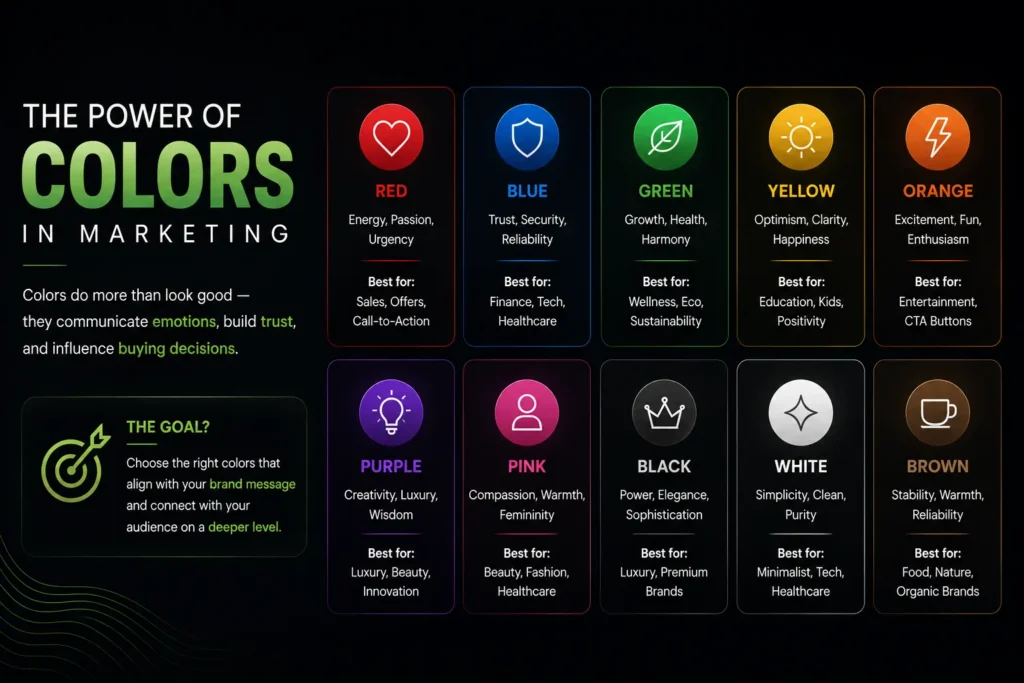
1. Red – Creates Urgency
Red grabs attention instantly. It creates excitement, urgency, and passion, making it one of the most effective colors for promotions and limited-time offers.
Best used for:
- Sale banners
- Clearance offers
- Call-to-action buttons
- Food brands
Red encourages customers to act quickly.
2. Blue – Builds Trust
Blue is associated with reliability, professionalism, and security. Many banks, technology companies, and healthcare brands use blue to establish credibility.
Best used for:
- Corporate websites
- Financial services
- Technology companies
- Healthcare businesses
Blue helps customers feel confident about your brand.
3. Green – Represents Growth
Green symbolizes nature, health, freshness, and sustainability. It is commonly used by eco-friendly and wellness brands.
Best used for:
- Organic products
- Healthcare
- Environmental businesses
- Finance
Green also creates a calming experience for website visitors.
4. Yellow – Captures Attention
Yellow represents happiness, optimism, and energy. It quickly attracts attention without appearing aggressive.
Best used for:
- Promotions
- Retail businesses
- Children’s brands
- Food marketing
Too much yellow, however, can become overwhelming.
5. Orange – Encourages Action
Orange combines the excitement of red with the friendliness of yellow. It feels energetic and inviting.
Best used for:
- CTA buttons
- E-commerce stores
- Fitness brands
- Promotional campaigns
Orange often motivates customers to take action.
6. Black – Adds Luxury
Black communicates sophistication, elegance, and exclusivity. Luxury brands frequently use black to create a premium image.
Best used for:
- Fashion brands
- Luxury products
- High-end services
- Premium packaging
Black creates a bold and professional appearance.
7. White – Keeps Things Simple
White represents simplicity, cleanliness, and clarity. It also improves readability and gives websites a modern look.
Best used for:
- Minimalist websites
- Healthcare
- Technology
- Lifestyle brands
White helps other design elements stand out.
8. Purple – Inspires Creativity
Purple is linked with imagination, luxury, and innovation. It often appeals to audiences looking for premium or creative products.
Best used for:
- Beauty brands
- Creative agencies
- Educational platforms
- Luxury products
Purple adds uniqueness to a brand identity.
9. Pink – Expresses Warmth
Pink creates feelings of kindness, compassion, and creativity. Modern brands also use pink to appear approachable and energetic.
Best used for:
- Beauty products
- Fashion
- Lifestyle brands
- Wellness businesses
Pink works well for brands targeting younger audiences.
10. Brown – Shows Reliability
Brown symbolizes stability, honesty, and comfort. It is commonly used by brands connected to handmade products, coffee, furniture, and outdoor businesses.
Best used for:
- Furniture brands
- Coffee shops
- Handmade products
- Outdoor businesses
Brown creates a natural and dependable brand image.
How to Choose the Right Marketing Colors
Selecting colors should depend on your brand’s goals and audience rather than personal preference.
Keep these factors in mind:
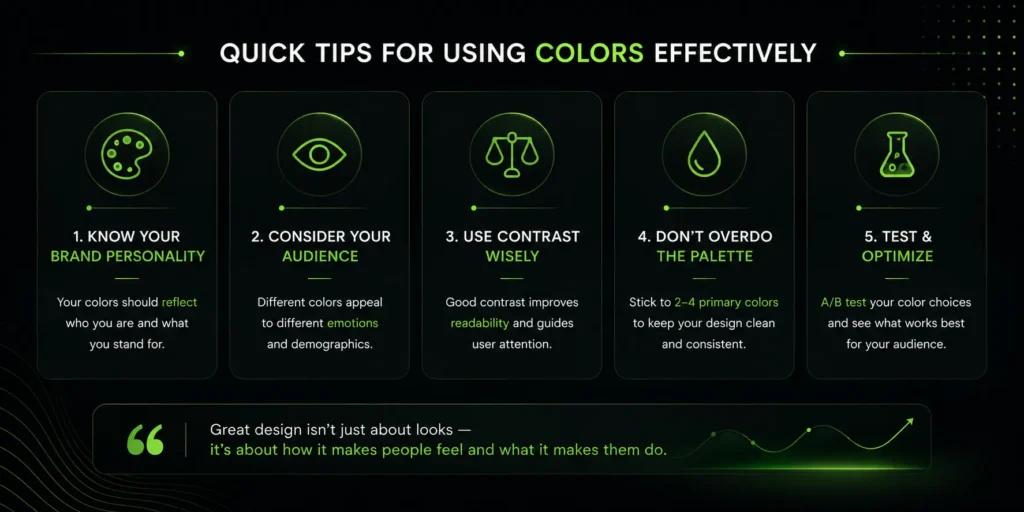
- Understand your target audience.
- Match colors with your brand personality.
- Maintain consistency across all platforms.
- Consider cultural meanings of colors.
- Use contrast to improve readability.
- Test different color combinations.
A thoughtful color strategy helps create a stronger and more recognizable brand.
Understanding Your Target Audience
Choosing the right colors becomes much easier when you understand your target audience. Different age groups, cultures, and industries often respond differently to the same color.
For example, bright and energetic shades may appeal to younger audiences, while professional and neutral tones are more suitable for corporate businesses.
Your industry also plays an important role in color selection. Healthcare brands often use blue or green to communicate trust and wellness, while luxury brands frequently rely on black or gold to create a premium image.
It is also helpful to maintain consistent colors across your website, social media, advertisements, and product packaging so customers can easily recognize your brand. Before making a final decision, test different color combinations and gather feedback from your audience.
Even small adjustments in color can improve readability, strengthen brand recognition, and encourage visitors to spend more time exploring your website.
A thoughtful color strategy creates a more engaging experience and helps build stronger relationships with potential customers. Reviewing your branding regularly helps ensure your visuals remain consistent with changing customer expectations and current design trends.
Small improvements can make your brand more memorable and professional.
Consistent branding across your website, social media, and advertisements helps customers recognize your business and builds long-term trust.
Successful brands regularly evaluate their visual identity to ensure it aligns with changing customer preferences and industry trends.
A clear and consistent design approach improves recognition, strengthens credibility, and creates a better experience across websites, social media platforms, advertisements, and product packaging.
Reviewing visual elements from time to time helps businesses stay relevant and memorable in a competitive market.
Common Color Mistakes to Avoid
Many businesses choose colors without considering their psychological impact.
Avoid these common mistakes:
- Using too many colors
- Ignoring your target audience
- Choosing poor color contrast
- Following trends without strategy
- Inconsistent branding
- Overusing bright colors
- Forgetting accessibility guidelines
- Using colors that don’t reflect your brand
Avoiding these mistakes creates a more professional and trustworthy brand identity.
Consistent visual branding helps businesses build familiarity, improve customer recognition, strengthen credibility, and create memorable experiences across websites, advertisements, social media, emails, and printed promotional materials.
Conclusion
Choosing the right Marketing Colors is an important part of building a successful brand. Every color influences customer emotions differently, from creating trust and excitement to encouraging purchases and strengthening brand recognition.
By understanding how colors affect consumer behavior, businesses can design better websites, stronger branding, and more effective marketing campaigns.
Whether you’re creating a new brand or refreshing an existing one, using the right Marketing Colors can help improve customer engagement and support long-term business growth.
Frequently Asked Questions (FAQs)
1. What are Marketing Colors?
Marketing Colors are colors used in branding, advertising, websites, and promotional materials to influence customer emotions and buying decisions.
2. Which color attracts customers the most?
Red is often used to attract attention because it creates urgency and excitement, while blue is widely trusted for professional and corporate brands.
3. How many colors should a brand use?
Most businesses use two to four primary brand colors to maintain consistency and improve brand recognition.
4. Do Marketing Colors affect purchasing decisions?
Yes. Research shows that colors influence first impressions, emotions, and customer behavior, making them an important part of effective marketing strategies.
