

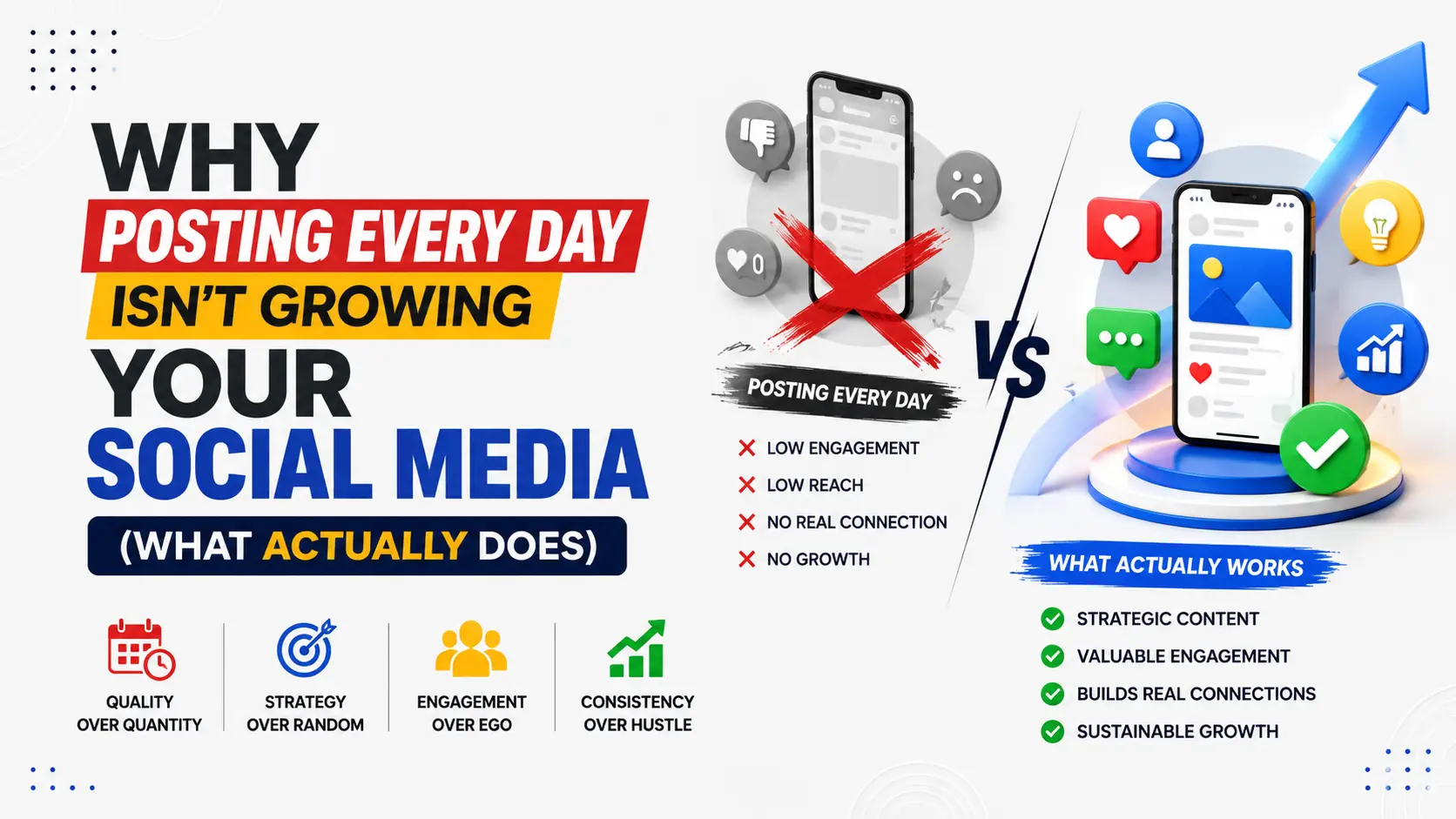
Social Media Growth Strategy: Why Daily Posting Actually Fails
A social media growth strategy built entirely around posting frequency is one of the most common mistakes businesses make. The advice to “just post every day” gets repeated so often that it’s become accepted wisdom, yet plenty of accounts post daily for months without seeing any meaningful growth. The problem isn’t a lack of consistency — it’s that consistency alone was never the real driver of growth in the first place.
Why “Post More” Became the Default Advice
The idea that posting frequency drives growth is easy to understand and easy to measure, which is exactly why it spread so widely. It’s a simple metric anyone can track — did you post today or not? But a genuine social media growth strategy requires looking past this surface-level activity toward what actually causes an algorithm to show your content to new people, and what causes those new people to stick around. Frequency without the right underlying strategy just means posting more content that doesn’t grow anything.
What Social Media Algorithms Actually Reward
Every major platform’s algorithm is built to keep users on the app longer, which means it prioritizes content that generates engagement, watch time, or meaningful interaction, not simply content that exists. Engagement signals like comments, shares, and time spent are typically weighted far more heavily than posting frequency alone. This is the core reason a solid social media growth strategy focuses on content quality and engagement triggers rather than simply filling a content calendar.
Engagement Rate Matters More Than Post Count
An account that posts three times a week but consistently generates strong comments and shares will typically outperform an account posting daily with low engagement on each post. Platforms interpret high engagement as a signal that content deserves wider distribution, which means engagement rate — not raw posting frequency — determines how far each individual post travels. This single distinction changes how most businesses should approach their social media growth strategy from the ground up.
The First Three Seconds Determine Everything
For video content specifically, the opening moments determine whether a viewer stays or scrolls away immediately. Content that fails to hook attention within the first few seconds gets skipped regardless of how good the rest of it is, and platforms notice this drop-off, reducing future distribution. Any effective social media growth strategy treats the opening hook as the single most important element of every piece of content, above production quality or even topic choice.
Why Niche-Specific Content Outperforms Broad Content
Accounts that post a wide variety of unrelated topics often struggle to build a consistent, engaged following, since the algorithm has difficulty understanding exactly who to show the content to. Staying tightly focused on a specific niche or theme helps platforms accurately match content with the right audience, which compounds over time as engagement patterns become clearer. This focus is frequently the missing piece in a struggling social media growth strategy, even when posting frequency looks perfectly consistent.
Comments and Replies Matter More Than Most Businesses Realize
Actively responding to comments within the first hour of posting signals to the algorithm that a post is generating real conversation, which can meaningfully boost its initial distribution. Many businesses post content and then move on immediately, missing this critical engagement window entirely. Building comment interaction into your social media growth strategy costs nothing extra in production but can noticeably affect how far each post reaches.
Why Saves and Shares Outweigh Likes
Not all engagement carries equal weight. Likes are the easiest, lowest-effort interaction, while saves and shares require a viewer to take a more deliberate action, signaling stronger content value to the platform. Content designed to be genuinely useful or save-worthy — checklists, tips, before-and-after comparisons — tends to generate this higher-value engagement more consistently than purely entertaining content. Prioritizing save-worthy content is a specific tactic worth building into any serious social media growth strategy.
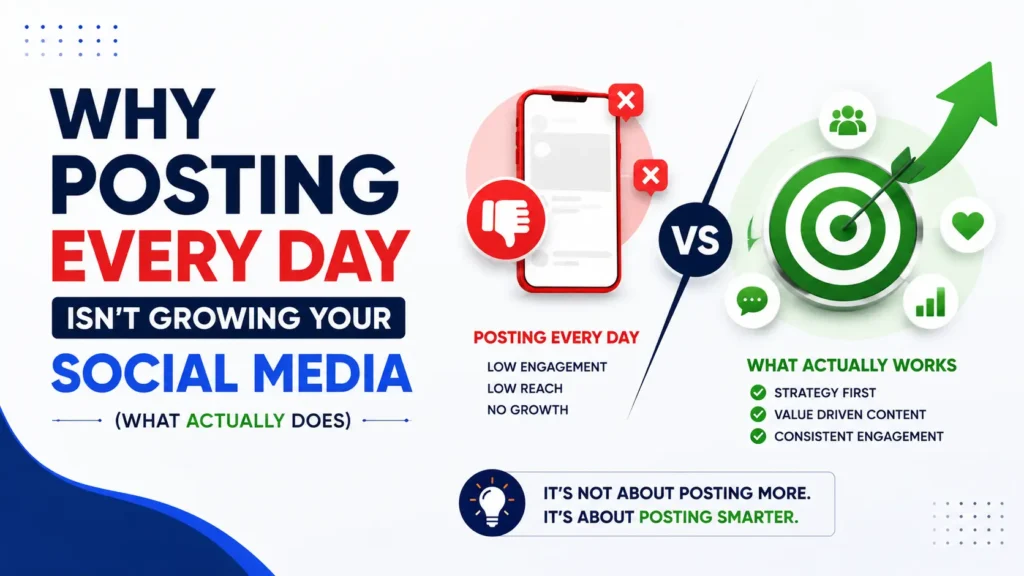
The Role of Consistency (Without Overdoing It)
Consistency does matter, but not in the way most people assume. Rather than posting as often as possible, the more effective approach involves posting reliably at a sustainable pace while maintaining quality — three well-made posts per week consistently outperform seven rushed posts in most cases. This distinction between frequency and reliability is often misunderstood in casual social media growth strategy advice circulating online.
Why Trends Should Be Adapted, Not Copied Directly
Jumping on trending audio or formats can help visibility, but only when adapted to fit a specific brand or niche rather than copied generically. Businesses that use trends purely for the sake of participating, without connecting them to their actual content theme, often see engagement that doesn’t translate into meaningful followers or customers. A thoughtful social media growth strategy treats trends as a tool to reach new audiences, not a replacement for a consistent content identity.
Why Analytics Should Guide Every Decision
Most platforms provide detailed analytics showing which posts perform best, when your audience is most active, and where engagement drops off within a video. Ignoring this data means repeating the same mistakes indefinitely, while using it allows for continuous, targeted improvement. Reviewing analytics regularly is one of the most underused steps in building an effective social media growth strategy, since many businesses check metrics only occasionally rather than systematically.
Why Follower Count Isn’t the Right Success Metric
Chasing follower count alone can lead to decisions that inflate numbers without building genuine audience connection — like running follower-focused giveaways that attract people uninterested in your actual content or offers. A more meaningful social media growth strategy tracks engagement rate, saves, shares, and conversions alongside follower growth, since these metrics better reflect whether the audience being built is actually valuable to the business.
The Compounding Effect of Doing This Right
Accounts that focus on engagement quality, hook strength, and niche consistency tend to see growth accelerate over time rather than staying flat, since each well-performing post makes the algorithm more likely to distribute future content widely. This compounding effect is the real payoff of a properly built social media growth strategy, and it’s precisely why frequency-only approaches plateau while quality-focused approaches continue growing.
How to Start Fixing Your Current Approach
Rather than overhauling everything at once, start by reviewing your last ten posts and identifying which ones generated the strongest engagement, then look for patterns in hook style, topic, or format. Focus new content around what’s already working, while gradually testing small variations to expand what resonates. This data-driven refinement process forms the foundation of any sustainable social media growth strategy, replacing guesswork with actual evidence of what your specific audience responds to.
Final Thoughts
A genuine social media growth strategy has very little to do with how often you post and everything to do with what happens in the moments after someone sees your content — whether they stay, engage, save, or scroll past. Posting frequency without engagement strategy simply produces more content that goes nowhere, while a smaller volume of well-crafted, niche-focused, engagement-optimized content consistently outperforms it over time. Businesses that shift focus from quantity to quality tend to see growth that actually compounds rather than plateaus.
Not sure why your social media isn’t growing despite consistent posting? Get in touch with me for a quick review of what might be holding your account back.
Frequently Asked Questions
Does posting every day really not help social media growth? Not on its own. Posting frequency without strong engagement, hooks, or niche focus often produces content that doesn’t get distributed widely, meaning consistent posting alone doesn’t guarantee growth.
What matters more, likes or comments? Comments generally carry more weight than likes, since they require more effort and signal stronger engagement to the algorithm, often leading to wider distribution of the post.
How important is the opening few seconds of a video? Extremely important, especially for video content. Most viewer drop-off happens within the first few seconds, and platforms use this early retention data to decide how widely to distribute the content.
Should I follow every trending audio or format? Only if it fits naturally with your content niche. Using trends purely for visibility without connecting them to your actual brand often generates engagement that doesn’t translate into meaningful followers or customers.
Is follower count a good measure of social media success? Not on its own. Engagement rate, saves, shares, and conversions typically reflect audience value more accurately than raw follower count, since a large but disengaged following provides little real business benefit.
How often should I actually be posting? Quality and consistency matter more than raw frequency. Three well-made, engaging posts per week generally outperform seven rushed, low-engagement posts, according to how most platform algorithms prioritize content distribution.
How long does it take to see results from a better growth strategy? Most accounts start seeing measurable engagement improvements within a few weeks of shifting focus toward hooks, niche consistency, and engagement optimization, though follower growth typically compounds more noticeably over two to three months.
